McDonald's Digital Transformation & Global Tech Stack
Key Takeaways
- •McDonald's leverages a robust cloud-based infrastructure to manage its vast global operations and digital services.
- •Their tech stack integrates mobile ordering, AI-powered drive-thrus, and sophisticated supply chain analytics.
- •Data-driven personalization and automation are key pillars of McDonald's future technology strategy.
- •High transaction volumes demand resilient, low-latency systems capable of processing millions of orders daily.
Technical Specifications & Data
| Global Restaurant Count (approx.) | 40,000+ |
| Daily Global Transactions (estimated) | 69+ million |
| Primary Cloud Provider(s) | AWS, Google Cloud Platform (hybrid strategy) |
| Mobile App Downloads (global, estimated) | 200+ million |
| POS System OS (common variants) | Customized Linux/Windows Embedded |
| AI in Drive-Thru Deployment | Phased rollout in thousands of locations |
| Average Order Processing Time (Digital) | < 10 seconds (order submission to kitchen) |
| System Uptime Goal (Mission-Critical) | 99.99% (four nines) |
| Data Volume (daily, estimated) | Petabytes of operational, transactional, and customer data |
| Key Data Analytics Platform | Distributed data lake & warehouse (e.g., Apache Spark, Google BigQuery) |
Technical Architecture Overview
McDonald's operates a remarkably complex, globally distributed technical architecture designed to serve millions of customers across over 40,000 restaurants daily. This intricate system spans multiple layers, from customer-facing interfaces to deep backend logistics. At its core, the architecture emphasizes scalability, resilience, and real-time data processing, transitioning increasingly towards a cloud-native paradigm.
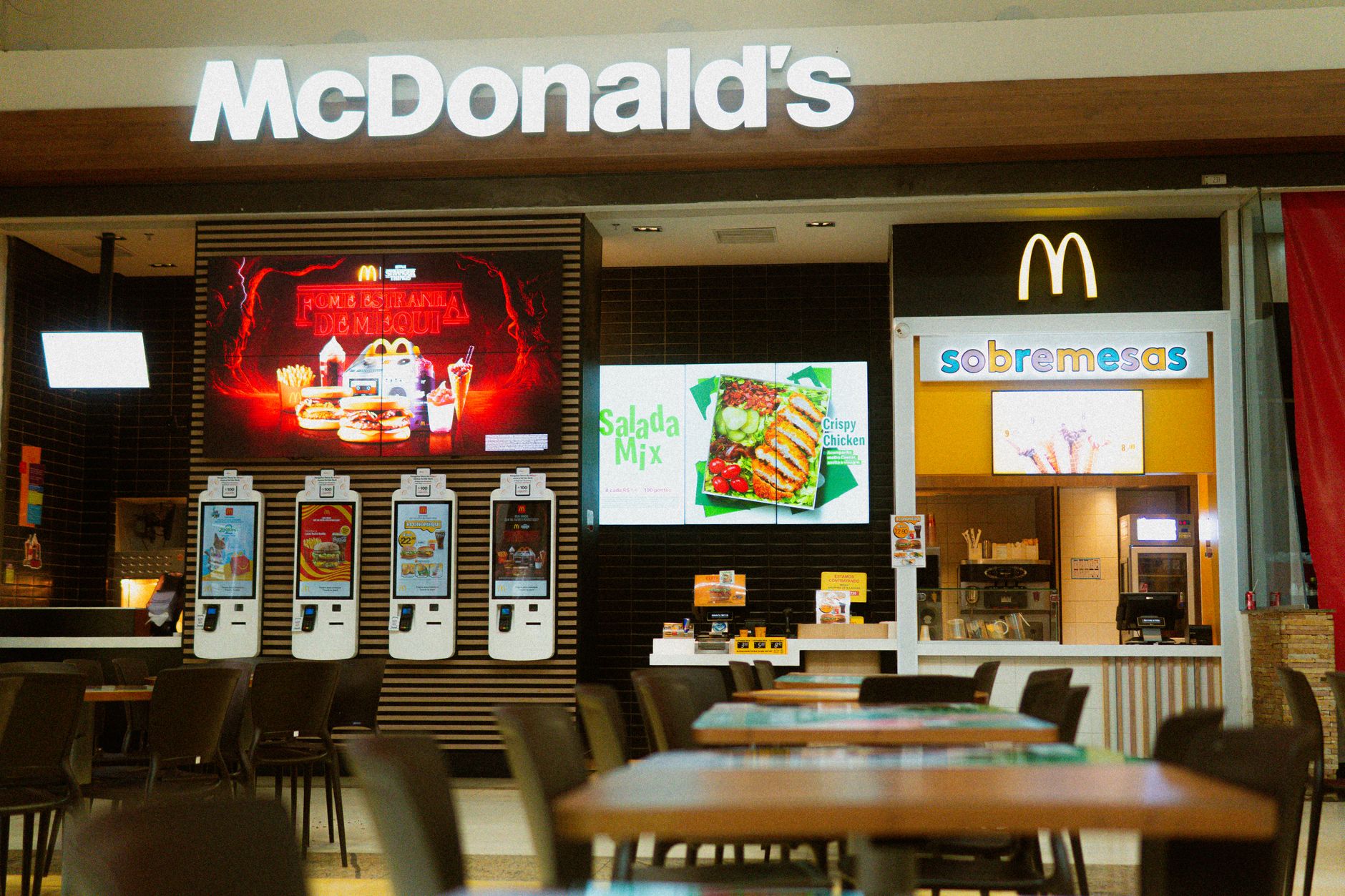
The customer-facing layer includes the ubiquitous Mobile Order & Pay application, self-service kiosks, and digital drive-thru menu boards. These systems are typically built on modern web and mobile frameworks, relying on robust APIs to communicate with backend services. For instance, the mobile app often interacts with services for authentication, menu retrieval, order placement, and payment processing, which are often hosted on major public cloud providers like AWS or Google Cloud Platform, leveraging microservices architectures for agility and independent scaling.
Behind the counter, the Point-of-Sale (POS) systems form the operational backbone. These are specialized terminals, often running customized Linux or Windows-based software, integrated with kitchen display systems (KDS) and inventory management modules. The POS systems are critical for order entry, payment, and transmitting orders to the kitchen, ensuring high availability even in offline scenarios with local data caching. They communicate with central restaurant management systems, often via secure VPNs, pushing transaction data and receiving menu updates.
Further upstream, McDonald's employs sophisticated supply chain management (SCM) platforms. These systems track ingredients from suppliers to distribution centers and ultimately to individual restaurants. Technologies like RFID, IoT sensors, and advanced analytics are increasingly being integrated to optimize inventory levels, reduce waste, and ensure food safety and quality across a vast global network. Data lakes and warehouses, often powered by technologies such as Apache Spark or Google BigQuery, consolidate vast amounts of operational data for insights into everything from customer preferences to predictive maintenance for equipment. The entire ecosystem is secured by multi-layered cybersecurity measures, including intrusion detection, robust access controls, and regular vulnerability assessments, vital for protecting sensitive customer and operational data.
Deep-Dive Systems & Performance Benchmarks
The performance and reliability of McDonald's core systems are paramount, given the sheer volume of transactions and the expectation for near-instantaneous service. Let's delve into some specific areas and their operational characteristics.
The Mobile Order & Pay application is a critical touchpoint. It typically handles millions of active users daily, especially during peak hours. Its backend infrastructure is designed for high concurrency, often utilizing auto-scaling groups on cloud platforms to manage fluctuating demand. Performance benchmarks for such applications aim for sub-200ms latency for critical actions like order submission, achieved through geographically distributed data centers and content delivery networks (CDNs). The app's recommendation engine, powered by machine learning algorithms, analyzes past purchase data and real-time trends to suggest personalized items, requiring low-latency inference services.
Drive-thru AI solutions, such as 'Dynamic Yield' (acquired by McDonald's), are increasingly being deployed. These systems use natural language processing (NLP) and voice recognition for order taking, combined with AI for dynamic menu pricing and personalized suggestions based on factors like weather, time of day, and historical purchase data. The computational demands for real-time speech-to-text conversion and AI inference are significant, often requiring edge computing solutions or rapid communication with cloud-based inference engines to maintain conversational flow and order accuracy. The system's accuracy rate for correctly identifying menu items and processing complex orders is a key performance indicator.
Within the kitchen, IoT and sensor technology are improving operational efficiency. Fryer oil quality sensors, temperature monitoring for refrigerators, and grill timers are integrated into a central kitchen management system. This system provides real-time alerts and optimizes cooking processes, reducing waste and ensuring product consistency. Data from these sensors feed into analytics platforms, allowing for predictive maintenance schedules and operational adjustments across the franchise network. The uptime requirement for all mission-critical systems, including POS, KDS, and payment processors, is typically 99.99% (four nines), reflecting the cost of even brief outages in high-volume environments. Transaction processing rates can reach thousands per second globally during peak periods, necessitating robust database management systems and distributed transaction processing capabilities.
Why This Matters & Industry Impact
McDonald's aggressive adoption and integration of technology are not merely about incremental improvements; they represent a fundamental shift in how a global QSR (Quick Service Restaurant) operates and competes. The strategic investments in digital infrastructure, AI, and data analytics are setting new industry benchmarks and reshaping customer expectations across the fast-food landscape.
Firstly, Enhanced Customer Experience: The seamless integration of mobile ordering, self-service kiosks, and personalized drive-thru experiences significantly reduces wait times, increases order accuracy, and offers a more customized journey for the customer. This 'frictionless' experience becomes a competitive differentiator, forcing other industry players to accelerate their own digital transformations. McDonald's ability to offer hyper-personalization, driven by AI, moves beyond simple transactions to creating a more engaging and sticky customer relationship.
Secondly, Operational Efficiency & Cost Reduction: Automation and data-driven insights streamline every aspect of restaurant operation, from inventory management and staffing to predictive maintenance of equipment. By optimizing supply chains and reducing food waste through precise forecasting, McDonald's can achieve significant cost savings at scale. The adoption of AI in drive-thrus, for example, not only speeds up service but also reduces the burden on human staff, allowing them to focus on more complex tasks or customer service.
Finally, Strategic Market Leadership & Data Advantage: The vast amounts of data collected across all digital touchpoints – from app usage patterns to drive-thru order anomalies – provide unparalleled insights into consumer behavior, market trends, and operational performance. This data informs menu innovation, marketing campaigns, and real estate decisions, solidifying McDonald's market leadership. The capability to rapidly deploy and iterate on new digital features keeps them at the forefront of the industry, influencing technology adoption across the broader restaurant sector. Other chains look to McDonald's for cues on investing in similar digital transformation initiatives, making their tech stack a de facto standard for large-scale QSR innovation.
Explore cloud solutions that power global enterprises like McDonald's for your business.
Chronological Timeline
Introduction of early electronic Point-of-Sale (POS) systems for order processing.
Initial rollout of Wi-Fi in select restaurants, signaling a move towards digital amenities.
Launch of the McDonald's Mobile Order & Pay app in key markets, beginning digital transformation of customer experience.
Major global rollout of self-ordering kiosks and digital menu boards in thousands of restaurants.
Acquisition of Dynamic Yield, an AI-powered personalization platform, and Plexure, a mobile technology company, to enhance customer experience and drive-thru capabilities.
Accelerated adoption of AI in drive-thrus, continued cloud migration, and deeper integration of IoT for kitchen automation and efficiency.
Frequently Asked Questions
What technology does McDonald's use for its mobile app?
How does McDonald's use AI in its operations?
What is McDonald's strategy for data security?
Daily Specs Editorial Staff
Lead Technical Analyst & Hardware Researcher
The Daily Specs editorial staff compiles, benchmarks, and verifies emerging technical specifications directly from system architecture manuals, hardware datasheets, and open-source codebases to deliver high-gain technical intelligence.