RepRapMicron: Unlocking Micron-Scale 3D Printing Precision
Key Takeaways
- •RepRapMicron is an open-source project dedicated to achieving sub-10 micron precision in FDM/FFF 3D printing.
- •It leverages highly optimized mechanical designs, advanced electronics, and specialized extrusion systems.
- •The project aims to enable desktop micro-fabrication for applications in biomedicine, microfluidics, and research.
- •Its focus on extreme resolution establishes new benchmarks for accessible, high-precision additive manufacturing.
Technical Specifications & Data
| Achievable Layer Height (Min) | 5-10 microns (0.005-0.010 mm) |
| XY Positioning Accuracy (Target) | +/- 2-5 microns |
| Z-Axis Lead Screw Pitch | 1mm or less (e.g., Ballscrew or T-lead screw) |
| Stepper Motor Angle | 0.9 degrees/step |
| Stepper Driver Microstepping | 256 microsteps (TMC series with SPI) |
| Nozzle Diameter Range | 0.05mm - 0.15mm (Hardened steel/Sapphire) |
| Extruder Gear Ratio | 50:1 or higher (e.g., Bondtech, Orbiter) |
| Linear Rail Type | Preloaded MGN series (e.g., MGN9/12) |
| Heated Bed Temperature Uniformity | +/- 0.5°C across surface |
| Max Print Volume (Typical) | 100x100x100 mm (Focus on precision over size) |
| Supported Filament Diameter Tolerance | +/- 0.01mm |
| Firmware Base | Highly modified Klipper or Marlin |
Technical Architecture Overview
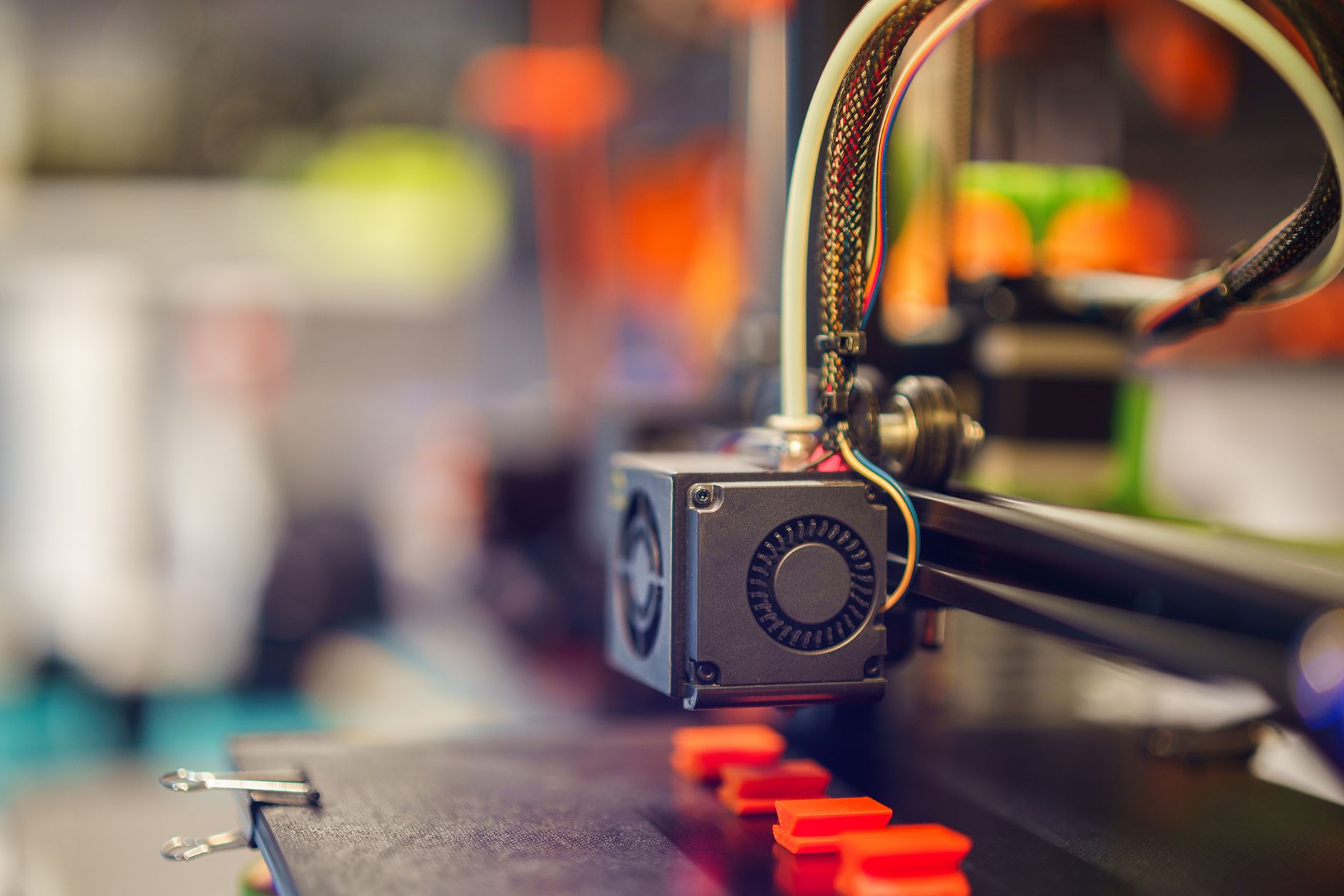
The RepRapMicron project stands as a testament to the open-source community's relentless pursuit of pushing manufacturing boundaries. At its core, it represents an ambitious endeavor to elevate Fused Deposition Modeling (FDM) and Fused Filament Fabrication (FFF) technologies to unprecedented levels of precision, specifically targeting the elusive micron scale. This requires a holistic approach to printer design, where every component, from the structural frame to the nozzle, is meticulously engineered for minimal tolerance and maximum rigidity.
- Mechanical System Rigidity: The foundation of micron-scale precision lies in an exceptionally rigid frame. RepRapMicron designs often employ robust metal alloys, such as CNC-machined aluminum or steel, in conjunction with kinematic mounting principles to minimize thermal expansion and vibration. Unlike conventional FDM printers, stress is placed on precise linear motion components. This includes high-precision linear rails (e.g., MGN9/12 series) with preloaded bearings and polished raceways, ensuring extremely low friction and zero backlash.
- Advanced Motion Control: Achieving sub-micron movements demands sophisticated stepper motor control. RepRapMicron typically integrates high-resolution stepper motors (e.g., 0.9-degree/step) paired with advanced stepper drivers capable of 256 or higher microstepping (e.g., Trinamic TMC2209 or TMC5160 with SPI control). This fine granular control over motor rotation translates directly into smoother, more precise axis movements. Furthermore, the use of very fine-pitch lead screws (ee.g., 1mm pitch) or ballscrews for Z-axis movement is crucial, often combined with anti-backlash nuts to ensure absolute positional accuracy during layer deposition.
- Extrusion System Precision: The extrusion system is arguably the most critical component for micron-scale printing. This involves not just a small nozzle but an entire ecosystem optimized for precise material flow. RepRapMicron systems feature specialized, ultra-small diameter nozzles, often ranging from 0.05mm to 0.15mm, crafted from hardened steels or sapphire for durability and wear resistance. The hotend design must ensure exceptional thermal stability, often employing sophisticated PID tuning and sometimes even liquid cooling for precise temperature regulation. The extruder mechanism itself uses high-ratio gearing (e.g., 50:1 or higher) to provide minute control over filament feeding, coupled with an idler bearing with minimal runout.
- Integrated Metrology & Calibration: To verify and maintain such high precision, RepRapMicron incorporates elements of metrology. This can range from integrated optical encoders on axes for real-time positional feedback to sophisticated bed leveling routines that measure surface topology with sub-micron accuracy. The calibration process is iterative and highly data-driven, often involving laser interferometry or microscopy to fine-tune motion parameters and ensure geometric fidelity.
- Firmware & Control Software: While often based on popular open-source firmwares like Marlin or Klipper, the RepRapMicron implementation features significant modifications. These include enhanced G-code parsing for extremely small movement commands, advanced acceleration and jerk control algorithms, and sophisticated thermal management profiles. The integration of pressure advance and linear advance features is pushed to their limits to minimize over-extrusion and under-extrusion artifacts at minute layer heights.
Deep-Dive Systems & Performance Benchmarks
Delving into the performance characteristics of RepRapMicron reveals a system meticulously engineered to redefine the capabilities of FDM. The focus shifts from print speed to print quality, repeatability, and the ability to manifest intricate geometries at resolutions previously confined to industrial-grade machines.
"The challenge of RepRapMicron isn't just making a part small, it's making a small part *accurate* and *repeatable* in a desktop environment." - A core design philosophy.
- Achievable Resolution: The primary benchmark for RepRapMicron is its ability to achieve truly micron-level resolution. Typical operational layer heights can range from 5 microns to 25 microns, with theoretical minimums even lower under ideal conditions. XY-axis positioning accuracy aims for tolerances within +/- 2-5 microns across the build plate. This enables the fabrication of features such as microfluidic channels, intricate lattice structures, and fine text with exceptional clarity. The minimum demonstrable feature size is often below 50 microns, allowing for geometries previously only possible with SLA or DLP systems.
- Repeatability and Precision: Consistency is paramount. RepRapMicron systems target a build-to-build repeatability in the Z-axis of less than 1 micron and XY-axis repeatability of less than 3 microns, crucial for multi-part assemblies or research applications requiring identical samples. This is maintained through precise thermal control of the build environment, often involving enclosed chambers with active heating to mitigate thermal warping and ensure material stability during printing.
- Speed vs. Quality Trade-offs: Unlike consumer 3D printers, RepRapMicron prioritizes quality over speed. Print speeds are significantly lower, typically ranging from 5mm/s to 20mm/s for critical layers, to allow for optimal material deposition and cooling, minimizing errors. Fast travel moves are still utilized, but the actual extrusion process is deliberately slow to ensure high fidelity.
- Thermal Management: Maintaining a stable thermal environment is critical. The heated bed requires uniformity across its surface, often within +/- 0.5°C, to prevent differential thermal expansion. The hotend, as mentioned, is designed for extreme temperature stability, crucial for consistent extrusion rates of engineering filaments. Some designs incorporate active air filtration or inert gas purging to control ambient conditions and prevent contamination, which can impact micro-scale prints.
- Material Compatibility at Micron Scale: While a RepRapMicron can print various thermoplastics, optimized results often come with specific materials. These include high-flow, low-viscosity PLA and PETG, as well as engineering plastics like ABS, PC, and PEEK, provided their rheological properties are suitable for ultra-fine extrusion. The choice of material often dictates the lowest achievable layer height and feature size, as viscosity and melt strength play a critical role in droplet formation and adhesion at such small scales. Filament diameter tolerance is also extremely critical; deviations beyond +/- 0.01mm can significantly impact print quality.
- Calibration and Verification: Calibration is not a one-time event but an ongoing process. Advanced systems use internal laser displacement sensors or capacitive probes to map the build surface with sub-micron resolution. G-code commands are often heavily pre-processed to compensate for known machine inaccuracies or material shrinkage. For example, a custom G-code might include `G29 S4` for advanced mesh bed leveling followed by `M420 S1 Z0.005` to apply a fine compensation. Post-print verification commonly involves optical microscopy, surface profilometry, or even SEM imaging to assess actual dimensions and surface roughness, ensuring the printed part meets the rigorous precision requirements.
Why This Matters & Industry Impact
The emergence of projects like RepRapMicron carries profound implications, not just for the 3D printing community but for a multitude of scientific, engineering, and industrial sectors. By democratizing access to micron-scale additive manufacturing, it fosters innovation and accelerates discovery in ways previously limited by expensive, specialized equipment.
- Advancing Micro-Manufacturing & Research: One of the most significant impacts is on micro-manufacturing. Researchers and developers can now rapidly prototype microfluidic devices, optical components, or even intricate sensors directly on their desktops. This eliminates the long lead times and high costs associated with traditional micro-fabrication techniques like photolithography or etching. For example, creating custom microfluidic channels with diameters as small as 100 microns, essential for cell sorting or chemical analysis, becomes economically viable. The ability to iterate quickly on design in academic settings is a game-changer.
- Biomedical and Healthcare Applications: The precision offered by RepRapMicron opens doors for custom biomedical devices. This includes highly detailed scaffolds for tissue engineering, micro-scale drug delivery systems, or patient-specific surgical guides with unprecedented accuracy. Imagine printing intricate vascular networks or cellular structures for regenerative medicine research, where the fidelity of the print directly impacts experimental validity. The open-source nature also encourages collaborative development of medical devices, potentially reducing costs and increasing accessibility globally.
- Electronics and Sensor Prototyping: For electronics, RepRapMicron can facilitate the creation of complex dielectric structures, custom sensor housings, or even jigs for micro-assembly. While not directly printing conductive traces, it provides the precise physical forms necessary for integrating micro-electronic components. The ability to print complex internal geometries with fine channels could lead to novel cooling solutions for microprocessors or advanced packaging for MEMS devices.
- Empowering the Open-Source Hardware Movement: True to its RepRap heritage, RepRapMicron reinforces the power of open-source hardware. By making the designs, methodologies, and technical insights publicly available, it lowers the barrier to entry for high-precision manufacturing. This fosters a global community of innovators who can build upon, modify, and improve the core design, leading to accelerated advancements. It also serves as an educational platform, teaching advanced engineering principles through hands-on engagement. The `VikOlliver/RepRapMicron/wiki` on GitHub serves as a central hub for this collaborative effort, embodying the spirit of shared knowledge.
- Future Outlook and Challenges: Looking forward, RepRapMicron represents a stepping stone towards truly multi-material, multi-functional desktop micro-fabrication. Future iterations might integrate active sensing capabilities directly into the printing process, or explore hybrid additive/subtractive manufacturing on a micro-scale. Challenges remain, particularly in material science (developing filaments optimized for extreme precision) and further refining thermal and environmental control. However, the foundational work laid by RepRapMicron significantly pushes the envelope, inspiring future generations of engineers and scientists to explore the uncharted territories of desktop manufacturing. It stands as a beacon for what is possible when collaborative effort meets ambitious technical goals.
Explore high-precision 3D printer components and specialty filaments for your next advanced fabrication project!
Chronological Timeline
Initial conceptualization and community discussions on 'ultra-precision RepRap' goals on GitHub.
Development of core mechanical architecture prototypes, focusing on rigidity and motion system selection.
First successful prints demonstrating sub-50 micron feature sizes and initial layer heights of 25 microns.
Ongoing optimization of extrusion systems, advanced firmware integration, and community-driven benchmark testing for 5-10 micron precision.
Frequently Asked Questions
What is the primary goal of the RepRapMicron project?
How does RepRapMicron achieve such high precision compared to standard 3D printers?
What are the main applications for a RepRapMicron printer?
Daily Specs Editorial Staff
Lead Technical Analyst & Hardware Researcher
The Daily Specs editorial staff compiles, benchmarks, and verifies emerging technical specifications directly from system architecture manuals, hardware datasheets, and open-source codebases to deliver high-gain technical intelligence.