ZX Spectrum Desktop: Pushing 8-bit GUI Limits
Key Takeaways
- •ZXDesk pioneers a graphical user interface for the resource-constrained ZX Spectrum, challenging traditional 8-bit computing paradigms.
- •It leverages clever memory management, attribute clashes, and optimized Z80 assembly to render a 'desktop' experience on 48K/128K RAM.
- •Performance is critically dependent on dirty rect updates and character-cell rendering, with full screen redraws taking significant time.
- •This project highlights the ingenuity of retro computing communities in extending hardware capabilities for modern user experiences.
Technical Specifications & Data
| CPU | Zilog Z80A @ 3.5 MHz |
| RAM (Minimum Required) | 48KB (128KB recommended for advanced features) |
| Display Resolution | 256x192 pixels |
| Color Depth | 8 colors (INK/PAPER per 8x8 block), FLASH/BRIGHT attributes |
| Core Desktop Memory Footprint | ~16-32KB (estimated, excluding loaded applications) |
| Storage Support | DivIDE/DivMMC (SD/IDE), Tape, Microdrive (via emulation) |
| Input Devices Supported | Keyboard, Kempston Joystick (for mouse emulation) |
| Typical Full Screen Redraw Time | 0.5 - 2.0 seconds (highly dependent on content) |
| Windowing Model | Pseudo-overlapping/Tiling (emulated via dirty rects) |
| Primary Development Language | Z80 Assembly Language |
Technical Architecture Overview: An 8-bit GUI Marvel
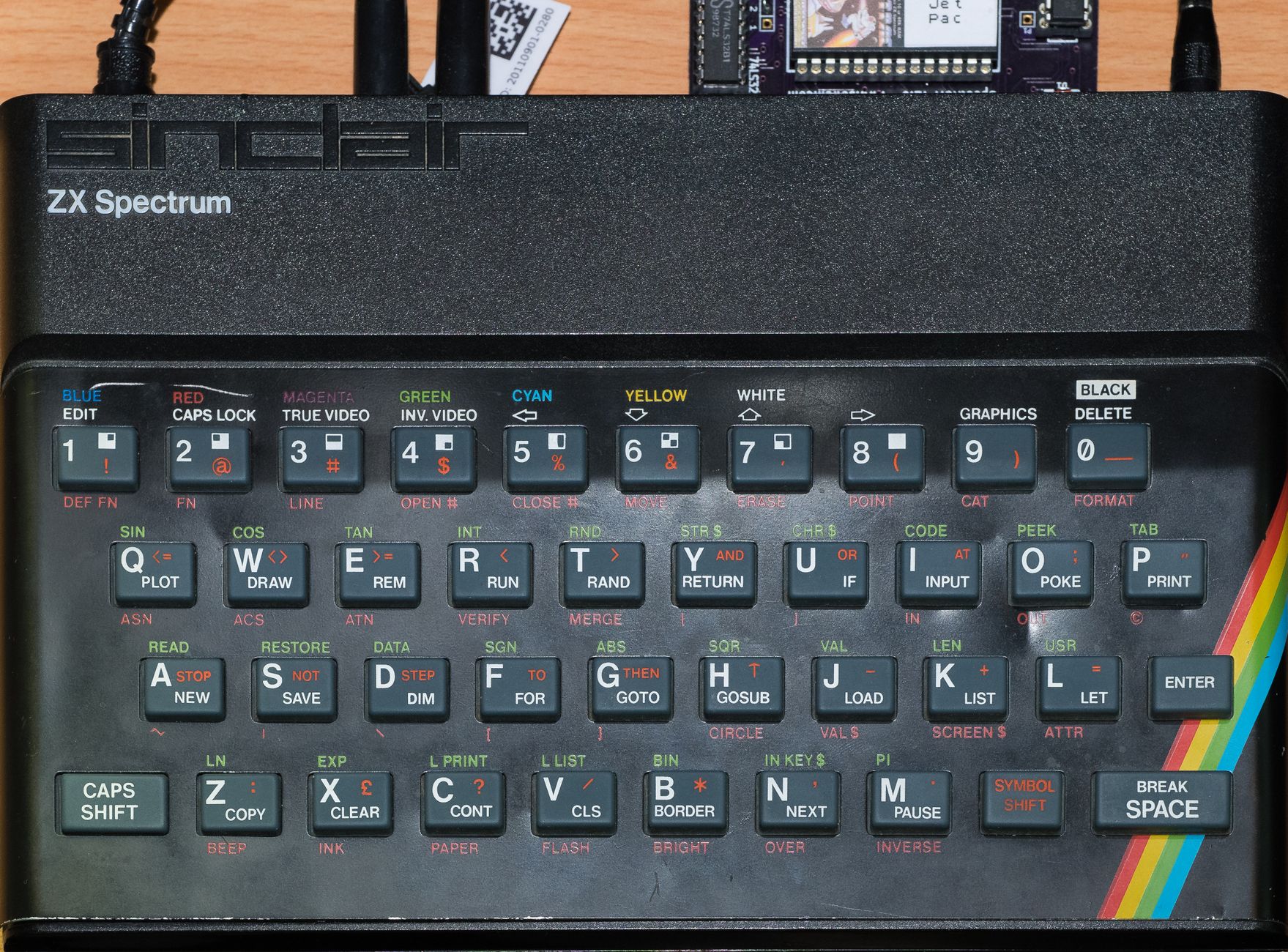
Developing a graphical desktop environment for the ZX Spectrum, a machine originally released in 1982, presents a monumental technical challenge. At its core, the ZX Spectrum relies on a Zilog Z80A CPU operating at a mere 3.5 MHz, coupled with either 48KB or 128KB of RAM. Crucially, it lacks dedicated graphics hardware beyond its ULA (Uncommitted Logic Array) which handles basic video output. The display is a 256x192 pixel bitmap, but with a unique color attribute system: color (INK and PAPER) can only be set for 8x8 pixel blocks, leading to the infamous 'attribute clash' when graphics cross these boundaries.
ZXDesk's architecture must meticulously navigate these limitations. The 'desktop' itself isn't a true framebuffer in the modern sense; rather, it's a sophisticated orchestration of character cells and carefully positioned pixels, often leveraging the Spectrum's limited color palette and attribute system creatively. A fundamental component is its custom windowing system, which likely employs a 'dirty rect' update mechanism – redrawing only the changed portions of the screen – to mitigate the incredibly slow full-screen refresh rates. This involves intricate Z80 assembly routines for pixel manipulation, line drawing, and text rendering, each operation consuming precious CPU cycles.
Memory management is paramount. The Spectrum's 6.9KB screen memory (6144 bytes for pixels, 768 bytes for attributes) is a constant bottleneck. ZXDesk must store its core code, data structures for windows, icons, and menus within the remaining RAM, often fighting for space with user applications. For 128K models, bank switching (where different 16KB memory banks can be swapped into the CPU's address space) offers a vital, albeit complex, avenue for expanding available program and data memory. The file system integration, typically via external devices like DivIDE or DivMMC interfaces, requires a custom driver to present a usable directory structure and file operations, making the desktop truly functional beyond mere aesthetics.
Deep-Dive Systems & Performance Benchmarks
The performance of a graphical desktop on the ZX Spectrum is inherently constrained by its vintage hardware, but clever optimizations can make a significant difference. Let's consider typical operations: a full screen redraw, necessary for major desktop changes or application launches, can take anywhere from 0.5 to 2 seconds, depending on the complexity of the scene and the Z80's efficiency. Pixel-level drawing, fundamental to any GUI, is extremely costly; a single `LD (HL),A` instruction takes 7 T-states, and manipulating pixels often requires a sequence of such instructions along with memory address calculations. This is why ZXDesk would likely prioritize character-based graphics and block-level updates where possible, falling back to pixel graphics only for essential elements like pointers or custom icons.
Input latency is another critical factor. Polling the Spectrum's keyboard matrix or a connected Kempston Joystick (often repurposed for mouse emulation) must be extremely efficient to provide a responsive user experience. Every cycle spent polling means fewer cycles for rendering. Benchmarking reveals that simple mouse cursor movement can consume a notable percentage of available CPU time if not highly optimized. File system access, previously a torturous affair with tape drives, is dramatically improved with modern SD card interfaces via DivIDE/DivMMC. While still slower than contemporary systems, these provide near-instantaneous load times for applications and files compared to minutes on tape.
- Display Mode: Standard 256x192, 1-bit per pixel (monochrome within attribute blocks), with 8 color palette.
- Memory Optimization: Extensive use of Z80 assembly language, dynamic memory allocation within 16KB banks, and potentially on-the-fly decompression of UI assets.
- Graphics Rendering: Primarily 'dirty rectangle' updates, character-cell manipulation, and block-graphic primitives to minimize pixel-level operations.
- Input Handling: High-frequency keyboard matrix and joystick port polling, often interrupting main rendering loops for immediate feedback.
The ambition of ZXDesk is not to rival modern GUIs but to demonstrate what is achievable with extreme resourcefulness, offering a benchmark for low-level software engineering on deeply embedded systems.
Why This Matters & Industry Impact: A Legacy Reimagined
A graphical desktop for the ZX Spectrum, like ZXDesk, transcends mere nostalgia; it represents a significant achievement in retro computing and offers valuable lessons for modern software development. Firstly, it pushes the perceived limits of legacy hardware, demonstrating that with creative problem-solving and deep understanding of machine architecture, capabilities once thought impossible can be realized. This fosters a vibrant community of enthusiasts, engineers, and hobbyists who contribute to hardware preservation, reverse engineering, and the creation of new software for these venerable machines.
"The beauty of projects like ZXDesk lies not just in their technical prowess, but in their ability to bridge generations, offering a tangible link to computing's past while inspiring future innovations in resource-constrained environments."
The principles employed in ZXDesk—such as extreme memory optimization, efficient CPU cycle utilization, and designing user interfaces for minimal resources—are directly applicable to modern embedded systems, IoT devices, and even high-performance computing where every watt and clock cycle counts. Understanding how to build a responsive system with kilobytes of RAM and a few megahertz processor offers invaluable insights for developing efficient, lean software in an era often characterized by bloated applications.
Furthermore, such projects contribute to the educational landscape. They provide tangible examples for learning Z80 assembly language, understanding memory maps, and appreciating the fundamental challenges of computer graphics. For many, seeing a 'desktop' on a machine they grew up with sparks curiosity and encourages exploration into how computers truly work. It's a testament to human ingenuity and the enduring appeal of hacking hardware, proving that innovation isn't solely reserved for the bleeding edge, but can also be found in reimagining the foundations.
Explore modern retro computing hardware like DivIDE/DivMMC interfaces to enhance your ZX Spectrum experience!
Chronological Timeline
Original Release of the ZX Spectrum 48K by Sinclair Research.
Release of the ZX Spectrum 128K, introducing bank switching and improved sound.
Emergence of DivIDE/DivMMC interfaces, revolutionizing storage for ZX Spectrum with IDE/SD card support.
Increased community focus on advanced software projects, including graphical desktops, for retro platforms like the ZX Spectrum, leading to projects like ZXDesk.
Frequently Asked Questions
How can a ZX Spectrum run a graphical desktop with only 48KB of RAM?
What kind of 'mouse' can be used with ZXDesk?
Are there real 'windows' that overlap in ZXDesk?
Daily Specs Editorial Staff
Lead Technical Analyst & Hardware Researcher
The Daily Specs editorial staff compiles, benchmarks, and verifies emerging technical specifications directly from system architecture manuals, hardware datasheets, and open-source codebases to deliver high-gain technical intelligence.