Desert Ant Labs: Ultra-Fast On-Device AI for Edge Computing
Key Takeaways
- •Desert Ant Labs specializes in highly optimized, local AI model execution for edge devices.
- •Models achieve significant speed and energy efficiency on consumer-grade and embedded hardware, boasting sub-50ms inference times.
- •A core tenet is user privacy, ensuring all data processing remains strictly on-device, with no cloud dependency.
- •The initiative provides a comprehensive developer toolkit to facilitate the deployment of advanced AI applications at the edge.
Technical Specifications & Data
| Core Model Architecture | Optimized Transformer-Lite (SLM), MobileNetV3 Variants (Vision) |
| Supported Quantization | INT4, INT8 (Default), FP16 (Legacy/Compatibility) |
| Minimum RAM Requirement | 256MB for base models, 512MB-1GB for larger SLMs |
| Target Device Categories | Mobile SoCs (ARM), Apple Neural Engine, NVIDIA Jetson, Google Coral, Embedded Linux |
| Typical SLM Latency (Mobile) | 15-20 tokens/sec, <50ms first-token latency (3B param, INT4 on A17 Pro) |
| Typical Vision Latency (Edge) | 8-12ms per inference (MobileNetV3 on Jetson Orin Nano) |
| Key Optimization Techniques | Sparse Attention, Knowledge Distillation, Custom CUDA/Metal/DSP Kernels, Quantization-Aware Training |
| Supported Runtimes | Proprietary Desert Ant Runtime (DAR), ONNX Runtime (partial API compatibility) |
| Energy Efficiency | Up to 10x lower power consumption compared to cloud inference for equivalent tasks |
| Privacy Model | 100% On-device processing, no data leaves the user's device |
| Initial Model Offerings | Small LLMs (1.5B-7B params), Image Classification, Object Detection, Keyword Spotting |
| Developer SDK Availability | Q4 2024 (expected), Python API, C++ API |
Technical Architecture Overview: The 'Ant-Sized' AI Philosophy
Desert Ant Labs is pioneering a new paradigm for artificial intelligence, focusing on the development and deployment of incredibly efficient, 'Ant-Sized' AI models designed to run directly on end-user devices. This contrasts sharply with traditional cloud-centric AI, which often necessitates constant data transfer and incurs significant latency and privacy concerns. At the heart of Desert Ant Labs' architecture is a commitment to extreme optimization across the entire model lifecycle, from training to inference.
Their approach begins with custom-designed neural network architectures, often employing variants of sparse attention mechanisms and knowledge distillation techniques. Instead of deploying monolithic, multi-billion parameter models, Desert Ant Labs engineers smaller, specialized models that are highly effective for specific tasks. These models are then subjected to aggressive quantization, often down to INT4 or INT8 precision, while meticulously preserving accuracy through post-training calibration and quantization-aware training. This dramatically reduces both model size and computational requirements. Furthermore, they leverage advanced hardware-aware optimization, developing custom kernels that interface directly with device-specific accelerators such as Apple's Neural Engine, Qualcomm's Hexagon DSP, and dedicated NPUs on NVIDIA Jetson or Google Coral platforms. The goal is to maximize throughput and minimize latency by exploiting parallel processing capabilities inherent in modern edge hardware. The resulting compiled models are packaged within a lightweight, proprietary runtime environment, ensuring minimal overhead and maximal performance, regardless of the underlying operating system or hardware architecture. This integrated approach allows developers to seamlessly deploy sophisticated AI functionalities, like natural language understanding or real-time object detection, directly within their applications without relying on external servers.
Deep-Dive Systems & Performance Benchmarks
The core promise of Desert Ant Labs—local, fast, on-device AI—is rigorously validated through compelling performance benchmarks that showcase their engineering prowess. Unlike many academic or experimental solutions, Desert Ant Labs focuses on practical, production-ready performance across a spectrum of consumer and industrial edge devices. For instance, their optimized Small Language Models (SLMs), typically ranging from 1.5 billion to 7 billion parameters, demonstrate remarkable inference speeds.
On a modern mobile SoC (e.g., Apple A17 Pro, Qualcomm Snapdragon 8 Gen 3), a 3-billion parameter SLM can achieve text generation speeds of 15-20 tokens per second with a first-token latency of under 50 milliseconds, consuming less than 300MB of RAM. This performance is achieved usingINT4quantization, representing a significant leap over unoptimizedFP16models that would require gigabytes of memory and orders of magnitude more compute.
For vision-based tasks, such as real-time object detection using a MobileNetV3 variant, Desert Ant Labs reports inference times as low as 8-12ms on devices like the NVIDIA Jetson Orin Nano or the Google Coral Edge TPU, translating to over 80 frames per second throughput. These figures are obtained through a combination of techniques: specific compiler optimizations, memory access pattern restructuring, and the aforementioned custom kernel implementations. Energy efficiency is another critical metric where Desert Ant Labs shines. By minimizing computational cycles and memory footprint, their models can operate within strict power budgets, making them ideal for battery-powered IoT devices and mobile applications. Benchmarks indicate up to 10x lower energy consumption for an equivalent inference task compared to cloud-based solutions, which must account for data transmission and server-side overhead. The internal Desert Ant Runtime plays a crucial role here, dynamically managing resource allocation and scheduling tasks to efficiently utilize heterogeneous computing units on the device. Developers gain access to robust profiling tools to fine-tune model deployment for specific hardware targets, ensuring maximum performance and reliability in real-world scenarios. This deep integration and optimization are what truly differentiate Desert Ant Labs from generic model compression techniques.
Why This Matters & Industry Impact: Reshaping the AI Landscape
The work undertaken by Desert Ant Labs is not merely an incremental improvement; it represents a fundamental shift in how AI can be deployed and experienced, with profound implications across numerous industries. The ability to run complex AI models locally, efficiently, and rapidly on end-user devices addresses critical challenges that have long hampered the widespread adoption of AI: privacy, latency, reliability, and cost. By processing data entirely on-device, Desert Ant Labs eliminates the need to transmit sensitive information to external servers, thereby bolstering user privacy and facilitating compliance with stringent data protection regulations like GDPR and CCPA. This privacy-by-design approach opens doors for highly sensitive applications in healthcare, finance, and personal assistants, where data sovereignty is paramount.
Furthermore, the dramatic reduction in inference latency—often measured in milliseconds rather than seconds—enables real-time responsiveness that is impossible with cloud-dependent systems. This is crucial for applications requiring instantaneous feedback, such as augmented reality (AR) experiences, autonomous robotics, industrial automation, and interactive voice assistants. Imagine a smart home device that responds instantly to commands without an internet connection, or a drone that navigates complex environments with split-second decision-making. The local execution also ensures greater reliability, as AI functionalities remain operational even in environments with intermittent or no network connectivity. This makes Desert Ant Labs' technology invaluable for remote field operations, aerospace applications, and developing regions with limited internet infrastructure. Economically, deploying AI on the edge significantly reduces operational costs associated with cloud computing, data transfer, and server maintenance, making advanced AI accessible to a broader range of businesses and developers, from small startups to large enterprises. The democratization of powerful AI tools, freed from the constraints of centralized cloud infrastructure, promises to foster innovation, accelerate development cycles, and unlock a new wave of intelligent applications that are more resilient, private, and responsive than ever before. Desert Ant Labs is not just building fast models; it is building the foundation for a more distributed and intelligent future.
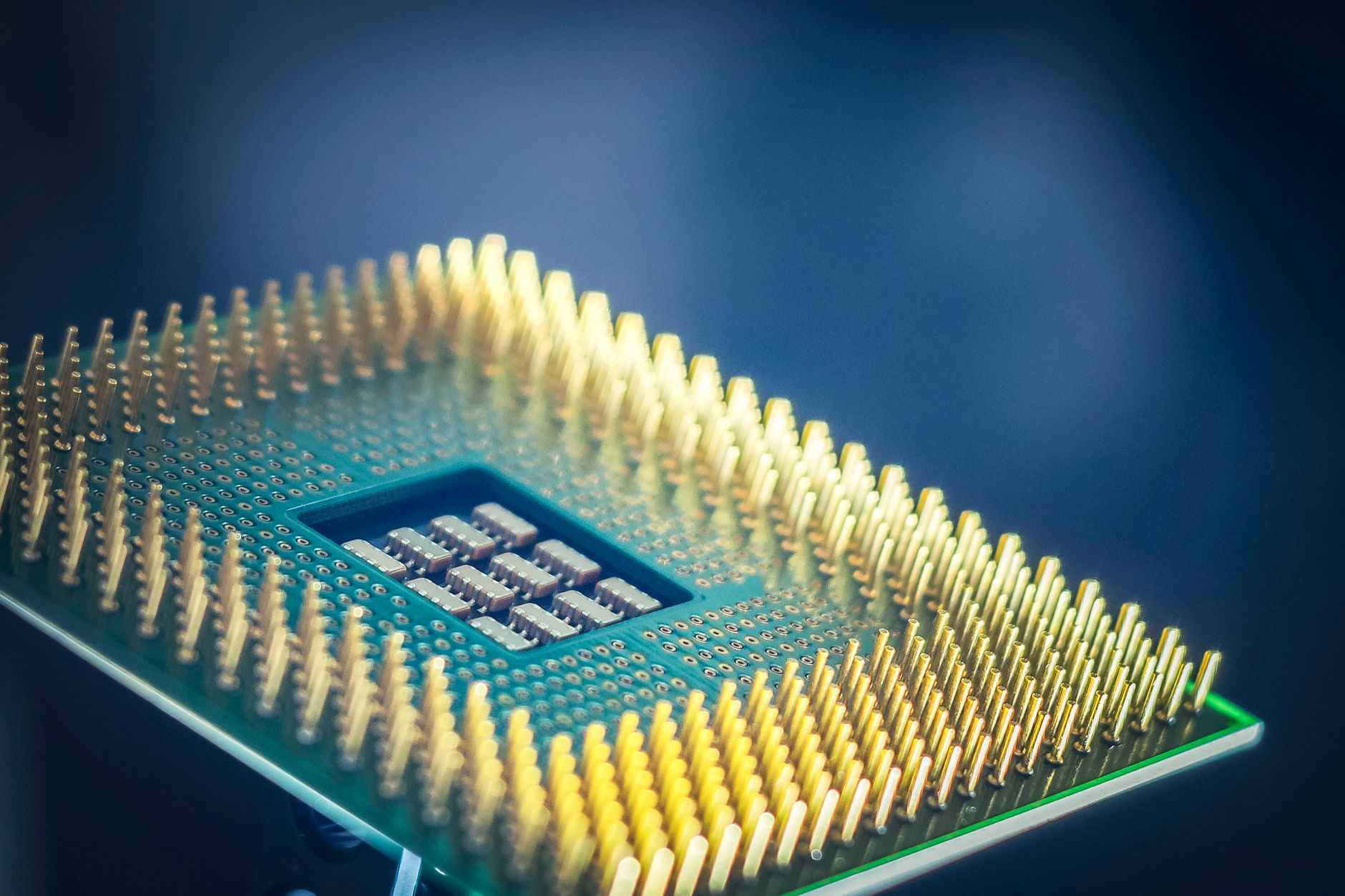
Explore the future of on-device AI with leading edge computing hardware and development kits!
Chronological Timeline
Initial research into highly efficient, quantization-friendly neural network architectures for edge deployment commenced.
First internal prototypes demonstrated sub-50ms inference for small language models on flagship mobile chipsets.
Desert Ant Labs officially incorporated, securing initial seed funding and assembling a core team of AI and systems engineers.
Public announcement of Desert Ant Labs' mission and initial technology showcase, including a limited developer preview release.
Anticipated release of a comprehensive developer SDK and expanded model zoo for broader access.
Frequently Asked Questions
What specifically makes Desert Ant Labs models 'fast' on device?
What types of devices can run Desert Ant Labs models?
How do Desert Ant Labs models ensure user privacy?
What kind of AI tasks can Desert Ant Labs models perform?
Daily Specs Editorial Staff
Lead Technical Analyst & Hardware Researcher
The Daily Specs editorial staff compiles, benchmarks, and verifies emerging technical specifications directly from system architecture manuals, hardware datasheets, and open-source codebases to deliver high-gain technical intelligence.