Flock Camera Map: ALPR Networks, Tech, & Your Privacy
Key Takeaways
- •Flock cameras are advanced, AI-powered Automated License Plate Readers (ALPRs) deployed by Flock Safety across the U.S.
- •Crowd-sourced initiatives like DeFlock and FlockHopper maintain interactive maps tracking over 100,000 ALPR units, revealing a widespread surveillance network.
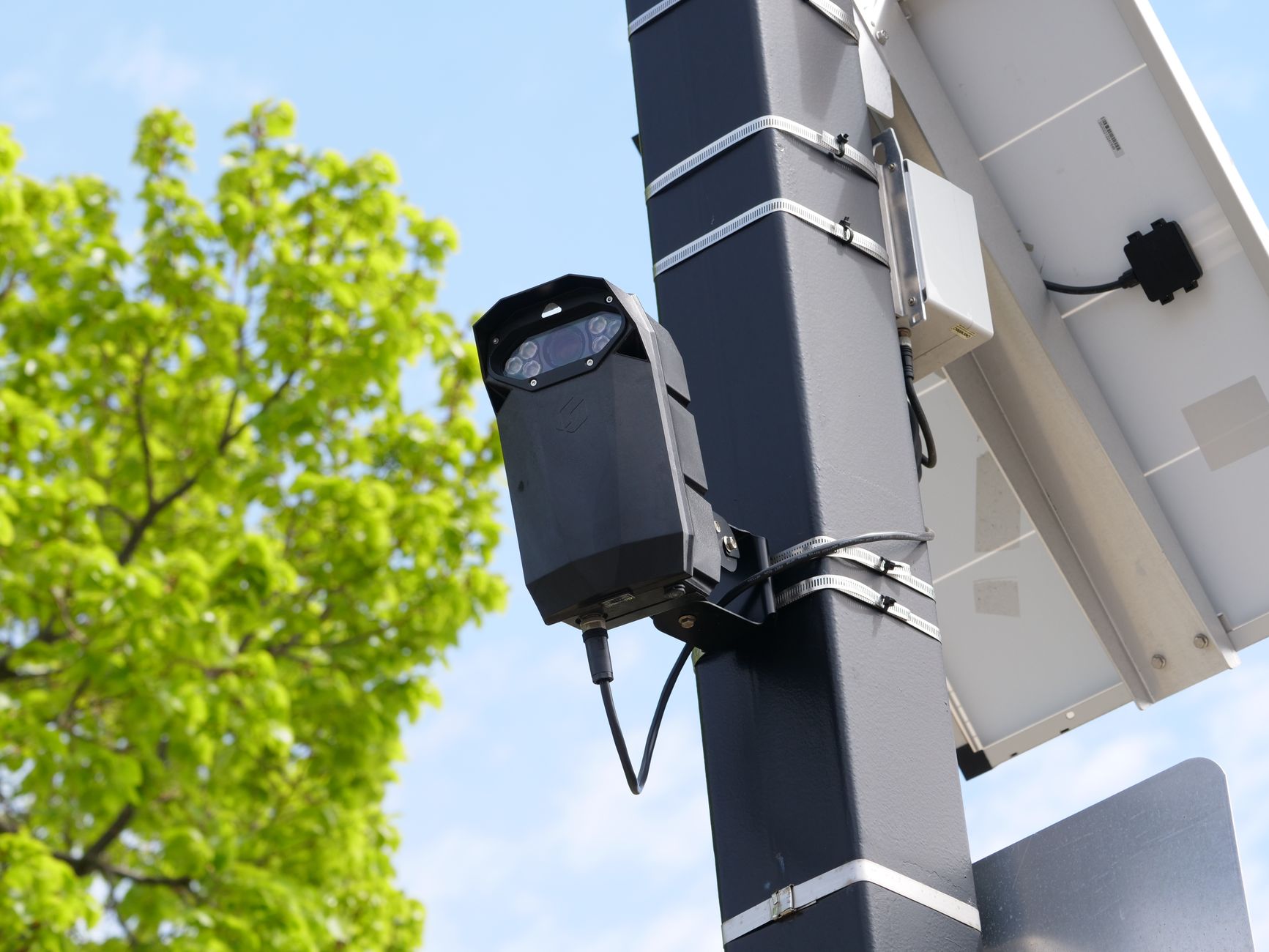
- •Key technical features include solar power, cellular connectivity, cloud-based data storage, and AI for comprehensive vehicle analysis beyond just license plates.
- •The extensive deployment raises significant privacy concerns regarding data retention, inter-agency sharing, and the potential for pervasive, continuous tracking.
Technical Specifications & Data
| Core Technology | Automated License Plate Recognition (ALPR) with AI Vision |
| Primary AI Capabilities | License plate capture, vehicle make/model/color identification, timestamping, speed estimation |
| Connectivity | 4G LTE / 5G Cellular (encrypted data uplink) |
| Power Source | Integrated Solar Panel with Battery Backup (typical), Wired Power (optional) |
| Typical Deployment Time | <1 hour per unit (facilitates rapid, flexible installation) |
| Data Retention (Default Flock Safety) | 30 days (variable by agency contract and local policy) |
| Estimated U.S. Camera Count | 100,000 - 120,000+ units (across various tracking efforts) |
| Geographic Reach (U.S.) | 49 States, ~6,000+ communities |
| Data Storage Architecture | Cloud-based (e.g., AWS, encrypted, centralized access) |
| Map Data Source (DeFlock/FlockHopper) | Crowd-sourced submissions, public records, user verification |
Understanding the Flock Camera Ecosystem & ALPR Technology
Flock cameras, primarily developed and deployed by Flock Safety, represent a significant advancement in automated surveillance technology, specifically focusing on Automated License Plate Recognition (ALPR). These aren't just passive cameras; they are sophisticated, AI-powered devices designed to actively capture and analyze comprehensive vehicle data. Each unit is engineered to record license plates, along with characteristics like vehicle make, model, color, and even potential unique features, alongside a timestamp and speed estimation for every passing vehicle.
The primary motivation behind their widespread adoption is public safety. Law enforcement agencies and communities subscribe to Flock Safety's service to deter crime, locate stolen vehicles, identify suspect vehicles in Amber Alerts, and gather crucial evidence for investigations. Unlike traditional CCTV, Flock cameras are purpose-built for rapid deployment and network integration, allowing for near real-time data access across participating agencies. Flock Safety claims nearly 100,000 of their cameras are active across more than 6,000 communities in 49 states, forming an extensive network that provides a continuous stream of vehicular intelligence. This network is not static; it's continually expanding, making it a critical component of modern policing strategies. The data collected is centralized in a cloud-based system, facilitating search and analysis functions that would be impossible with traditional, disconnected camera systems.
Why This Matters & Unique Technical Insights
The emergence of 'Flock camera maps' through projects like DeFlock and FlockHopper highlights a critical intersection of public safety technology and privacy concerns. These crowd-sourced initiatives attempt to provide transparency on a largely opaque surveillance infrastructure, with DeFlock alone indicating over 120,000 ALPR units tracked, a figure that often exceeds Flock Safety's self-reported numbers due to differing methodologies and inclusion of other ALPR brands. This discrepancy underscores a core technical challenge: the difficulty in accurately quantifying and mapping a rapidly expanding, distributed network.
From a technical perspective, Flock cameras leverage several key innovations. Their design often incorporates **integrated solar panels and battery backups**, enabling rapid deployment in locations without immediate access to grid power or hardwired internet. This self-sustaining power solution, combined with **4G/5G cellular connectivity**, allows installation in minutes, drastically reducing infrastructure costs and deployment time. The **AI capabilities extend beyond basic ALPR**; the systems can infer vehicle make and model even if the license plate is obscured or not recognized, and some models are capable of identifying specific object types or patterns of movement. Data collected is typically uploaded to secure, cloud-based platforms (e.g., AWS, Azure) where it is stored for a default of 30 days (though retention periods can vary by contract and jurisdiction). This cloud architecture facilitates rapid searching and data sharing among authorized law enforcement agencies, but also raises questions about data sovereignty, encryption standards, and potential for misuse.
The 'Information Gain' here lies in understanding the underlying technical enablers of this surveillance grid: highly modular, self-sufficient units designed for rapid, widespread distribution, integrated with sophisticated AI for comprehensive vehicle identification, and a robust cloud infrastructure for data management. These technical choices have profound implications for civil liberties, as the ease of deployment and data aggregation capabilities facilitate a level of ubiquitous vehicle tracking previously unseen. Understanding how these systems work, rather than just where they are, is crucial for informed public discourse and policy-making regarding surveillance technology.
Enhance your online anonymity and secure your data with a trusted VPN service.
Chronological Timeline
Flock Safety founded, beginning development of ALPR technology solutions.
Initial widespread deployment of Flock cameras across numerous U.S. communities and neighborhoods.
Increased public awareness and rise of independent crowd-sourced mapping projects like DeFlock and FlockHopper.
Ongoing expansion of ALPR networks, accompanied by intensifying public debate on surveillance, data privacy, and civil liberties.
Frequently Asked Questions
What is a Flock camera?
How many Flock cameras are there in the U.S.?
Can I see Flock cameras near me?
What are the privacy concerns with Flock cameras?
Daily Specs Editorial Staff
Lead Technical Analyst & Hardware Researcher
The Daily Specs editorial staff compiles, benchmarks, and verifies emerging technical specifications directly from system architecture manuals, hardware datasheets, and open-source codebases to deliver high-gain technical intelligence.