Flock Worker vs. Reporter: Public Camera Tech & Privacy Clash
Key Takeaways
- •Flock Safety's AI-powered LPR cameras are at the center of growing public debate concerning surveillance and transparency.
- •The incident highlights a critical tension between corporate control over infrastructure deployment and the public's right to document installations.
- •Understanding the technical specifics of LPR systems, including data retention and accuracy benchmarks, is crucial for informed policy and public discourse.
- •This event underscores the complex legal and ethical challenges posed by the widespread deployment of AI surveillance technology in public spaces.
Technical Specifications & Data
| Camera Sensor Type | High-resolution low-light sensor with IR illumination |
| LPR Accuracy (Day) | >98% (optimal conditions) |
| LPR Accuracy (Night) | >95% (optimal IR illumination) |
| Default Data Retention | 30 days (customizable by agency) |
| Primary Connectivity | 4G LTE Cellular with secure VPN tunnel |
| Typical Power Source | Solar panel with battery backup or AC power |
| AI Processing Architecture | Edge computing (on-device) for LPR, cloud for analytics |
| Data Encryption Standard | AES-256 for data at rest, TLS 1.2+ for data in transit |
| Operating Temperature Range | -20°C to 50°C (-4°F to 122°F) |
| Environmental Protection Rating | IP66 (Dust and heavy jet spray resistant) |
| Average Daily Data Usage (per unit) | ~500 MB (varies by traffic volume) |
Technical Architecture Overview: Flock Safety's Surveillance Ecosystem
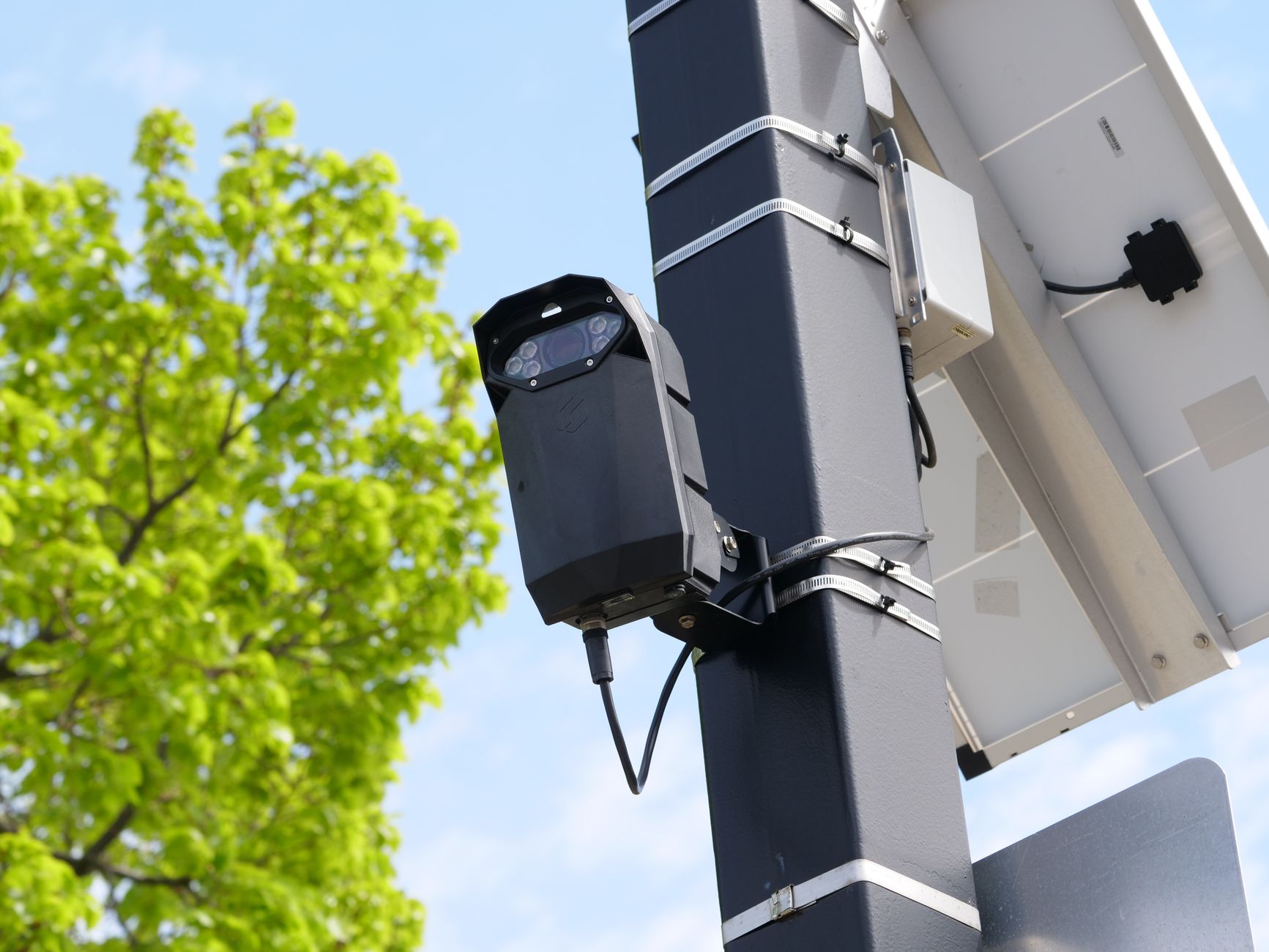
Flock Safety, a prominent provider of public safety technology, specializes in AI-powered license plate recognition (LPR) camera systems, primarily deployed by law enforcement agencies and neighborhood associations across the United States. Their flagship product, often referred to as the Flock Falcon, represents a sophisticated blend of hardware and cloud-based software designed for autonomous surveillance. The core architecture centers around robust outdoor camera units capable of capturing high-resolution images, both day and night, thanks to advanced infrared (IR) illuminators and low-light sensors.
Each camera unit operates as an edge computing device. This means that initial image processing—specifically, the detection of vehicles and the extraction of license plate data—occurs directly on the camera itself. This localized processing significantly reduces the amount of raw data that needs to be transmitted, optimizing cellular bandwidth usage and improving response times. After processing, relevant metadata, including license plate numbers, vehicle make, model, color, and timestamped images, are securely encrypted using AES-256 standards and transmitted via a dedicated 4G LTE cellular connection to Flock Safety’s cloud infrastructure. This reliance on cellular connectivity makes the cameras highly flexible in terms of deployment locations, as they do not require existing wired network infrastructure.
Powering these units is often a combination of solar panels and integrated battery backup systems, allowing for sustained operation in remote areas without direct access to the electrical grid. For urban deployments, AC power options are also available. Once data reaches Flock's cloud platform, it undergoes further analysis and is stored in secure, scalable databases, typically hosted on major cloud providers like AWS or Google Cloud. This backend system provides authorized users, primarily law enforcement, with a searchable interface to query vehicle data, set up alerts for 'hot list' vehicles, and access forensic tools. The system’s architecture emphasizes redundancy and high availability, ensuring continuous operation and data integrity.
"Flock Safety's architectural design prioritizes autonomous operation at the edge and secure, scalable data management in the cloud, enabling ubiquitous surveillance capabilities for its clientele."
The entire data pipeline, from capture to storage and access, is engineered with security protocols including TLS 1.2+ for data in transit and strict access controls based on user roles and multi-factor authentication. While the technology is marketed as a tool for crime prevention and investigation, its pervasive nature and the extensive database of vehicle movements it creates have ignited significant public debate regarding privacy, data retention policies, and the potential for surveillance creep. The incident with the reporter underscores the growing public scrutiny over the deployment and operational transparency of such powerful technical systems.
Deep-Dive Systems & Performance Benchmarks: Unpacking Flock's Capabilities
Beyond the architectural blueprint, understanding the performance benchmarks and detailed system capabilities of Flock Safety's LPR cameras is crucial for evaluating their real-world impact and effectiveness. A primary benchmark is License Plate Recognition (LPR) Accuracy. Flock Safety reports industry-leading accuracy rates, often exceeding 98% during daylight conditions and maintaining over 95% at night, under optimal IR illumination. These figures are influenced by various factors, including vehicle speed, ambient lighting, weather conditions (rain, fog), camera angle, and the condition of the license plate itself (e.g., dirt, damage). The embedded AI algorithms are continuously refined to improve performance across diverse environmental challenges.
The system's AI extends beyond simple LPR. Modern Flock cameras are equipped with computer vision models capable of identifying additional vehicle characteristics such as make, model, color, and even unique identifiers like missing hubcaps or bumper stickers. This multi-attribute recognition enhances the utility for investigations, allowing searches for vehicles even if a license plate is partially obscured or unknown. The processing latency—the time from image capture to data being available in the cloud for search—is typically within a few seconds, which is critical for real-time alerts and rapid response scenarios.
Data Retention Policy is a significant point of contention. By default, Flock Safety stores captured data for 30 days. However, this period can be customized by individual law enforcement agencies or customers, raising concerns about long-term data warehousing and the creation of extensive, searchable movement histories. Each camera unit, optimized for cellular data, typically consumes around 500 MB of data per day, though this can fluctuate based on traffic volume and system activity. This relatively low data footprint makes large-scale deployment economically viable via cellular networks.
- Power Efficiency: For solar-powered deployments, cameras employ intelligent power management, including sleep modes and event-triggered recording, to maximize battery life and ensure continuous operation.
- Environmental Resilience: With an
IP66 weather resistance rating, Flock cameras are built to withstand harsh outdoor conditions, operating reliably across a wide temperature range, typically from -20°C to 50°C (-4°F to 122°F). - Scalability: The backend cloud infrastructure is designed to handle petabytes of data and support thousands of concurrently active cameras, demonstrating robust scalability for widespread governmental and private sector adoption.
The system's reliance on edge computing for initial processing not only saves bandwidth but also contributes to lower operational costs and enhanced privacy by reducing the amount of raw, personally identifiable image data transmitted. However, the comprehensive nature of the data collected and its potential uses far beyond immediate crime fighting remain central to public discussions and challenges.
Why This Matters & Industry Impact: Surveillance, Transparency, and Civil Liberties
The incident where a Flock Safety worker called police on a reporter filming a public camera installation is more than just a momentary confrontation; it’s a microcosm of the escalating tension between advancing surveillance technology, public transparency, and civil liberties. This event highlights several critical areas of impact and concern for the industry and society at large.
Firstly, it underscores the ongoing debate over the definition of public space and the right to observe and document. While the installation of public infrastructure, even surveillance technology, typically occurs in public view, the reaction of the Flock worker suggests a proprietary stance on the visual information surrounding their equipment. Journalists, acting on behalf of the public interest, have a fundamental right to document events in public spaces, particularly when they involve technologies that impact citizen privacy. This incident sets a concerning precedent for limiting public oversight of technology deployment.
"The increasing ubiquity of AI-powered surveillance systems demands a parallel increase in transparency and public accountability from both vendors and deploying agencies."
Secondly, the widespread deployment of LPR systems like Flock Safety's raises profound civil liberties concerns. The constant collection of vehicle movement data creates a detailed record of individuals' daily lives, which can be vulnerable to misuse, hacking, or mission creep—where data collected for one purpose is later used for others (e.g., tracking political protesters, immigration enforcement). The concept of a 'chilling effect,' where individuals alter their behavior due to fear of surveillance, is a significant worry for privacy advocates. Organizations like the ACLU have consistently voiced concerns about the lack of clear legal frameworks governing data retention, sharing, and access for LPR systems.
From an industry perspective, this incident emphasizes the growing importance of ethical AI development and deployment. Technology companies operating in public safety must navigate not only technical challenges but also complex ethical, legal, and social landscapes. Transparency about data handling, clear communication with communities, and robust accountability mechanisms are no longer optional but essential for maintaining public trust and ensuring responsible technology adoption. Companies like Flock Safety face increasing pressure to balance the touted benefits of crime reduction with the potential erosion of privacy and civil rights.
Finally, the incident highlights the critical role of independent journalism and media scrutiny in holding both technology companies and government agencies accountable. As AI surveillance technologies become more sophisticated and integrated into our daily lives, the public's right to know how these systems operate, where they are deployed, and their full implications becomes paramount. This particular event serves as a stark reminder of the ongoing struggle to define the boundaries of digital surveillance in a democratic society, cementing the need for robust public discourse and policy development.
Chronological Timeline
Flock Safety founded, beginning rapid deployment of LPR camera systems across the U.S.
Incident occurs: A Flock Safety worker reportedly calls police on an InvestigateTV reporter documenting a camera installation.
Public debate intensifies regarding filming public infrastructure, corporate transparency, and journalists' rights.
Continued discussions among policymakers, privacy advocates, and law enforcement on surveillance ethics and appropriate use of AI-powered LPR technology.
Frequently Asked Questions
What is Flock Safety and its primary function?
Is it legal for a reporter to film public camera installations?
How does Flock Safety's AI technology work beyond just license plates?
What are the main privacy concerns surrounding Flock Safety cameras?
Daily Specs Editorial Staff
Lead Technical Analyst & Hardware Researcher
The Daily Specs editorial staff compiles, benchmarks, and verifies emerging technical specifications directly from system architecture manuals, hardware datasheets, and open-source codebases to deliver high-gain technical intelligence.