Floppy Disk Recycling: A Technical Guide to Data & Disposal
Key Takeaways
- •Floppy disks are complex e-waste due to their composite materials, requiring specialized recycling processes.
- •Secure data erasure for magnetic media often requires more than simple formatting; physical destruction or degaussing are ideal methods.
- •Despite obsolescence, a niche market exists for both new and recycled floppy disks, primarily for legacy systems and hobbyists.
- •Understanding the technical specifications of different floppy disk formats is crucial for effective data retrieval or destruction.
Technical Specifications & Data
| Disk Type | 8-inch Floppy Disk |
| Typical Capacity (DD/SD) | 80 KB - 1.2 MB |
| Original Manufacturer | IBM (1971) |
| Primary Material | Mylar disk in flexible jacket |
| Interface | Proprietary, then standard FDD controller |
| Key Innovation | First widespread removable storage |
| Disk Type | 5.25-inch Floppy Disk |
| Typical Capacity (DD/QD/HD) | 160 KB - 1.2 MB |
| Original Manufacturer | Shugart Associates (1976) |
| Primary Material | Mylar disk in flexible jacket |
| Interface | Standard FDD controller |
| Key Innovation | Smaller form factor, widespread PC adoption |
| Disk Type | 3.5-inch Floppy Disk |
| Typical Capacity (DD/HD/ED) | 720 KB - 2.88 MB (1.44 MB most common) |
| Original Manufacturer | Sony (1980) |
| Primary Material | Mylar disk in hard PVC shell, metal shutter |
| Interface | Standard FDD controller |
| Key Innovation | Rigid case, higher density, improved durability |
| Data Erasure Standard (Recommended) | DoD 5220.22-M or Degaussing |
| Primary Recycling Challenge | Composite material separation (plastic, metal, magnetic media) |
Why This Matters & Unique Technical Insights
While seemingly obsolete, floppy disks represent a significant challenge in e-waste management and data security. Unlike monolithic electronic components, floppy disks are composite media, combining magnetic film, polyester substrate, PVC plastic casing, and metal hubs. This multi-material construction makes mechanical shredding and material separation significantly more complex and less economically viable than for items like circuit boards. From a data security perspective, simply 'deleting' files or 'initializing' a floppy disk is insufficient; magnetic remnants can often be recovered with forensic tools. This necessitates advanced data sanitization techniques, such as degaussing (exposure to a powerful magnetic field to scramble data) or physical destruction, to meet standards like DoD 5220.22-M. Furthermore, the continued, albeit niche, demand for new and recycled floppy disks (as highlighted by floppydisk.com's services) underscores their persistent role in legacy industrial systems, vintage computing, and even specialized audio/musical equipment. This unique intersection of historical technology, material science, and data security makes their proper recycling and disposal a topic of distinct technical interest, moving beyond a simple 'throw-away' mentality.
The Evolution of Floppy Disks: A Technical Overview
The floppy disk's journey from an 8-inch, 80KB IBM invention to the 3.5-inch, 1.44MB ubiquitous storage medium is a testament to rapid technological evolution. Early 8-inch disks were truly 'floppy,' lacking a rigid outer casing, while subsequent 5.25-inch disks introduced a more robust flexible jacket. The advent of the 3.5-inch disk by Sony in the early 1980s marked a significant leap, introducing a hard plastic shell, a spring-loaded metal shutter, and higher data densities. These improvements were not merely cosmetic; they directly impacted data reliability, protection against dust and bending, and ultimately, user adoption. Technical specifications like coercivity (the magnetic field strength required to demagnetize the disk), track density (tracks per inch), and bit density (bits per inch) steadily increased over generations. The transition from single-sided to double-sided, and single-density to high-density formats, pushed the boundaries of magnetic recording technology within a constrained physical footprint. Understanding these different generations is crucial for identifying the materials and construction, which in turn informs optimal recycling and data destruction methodologies. The transition to MFM (Modified Frequency Modulation) encoding and then RLL (Run Length Limited) for higher densities illustrates the complex engineering behind these seemingly simple storage devices.
Safe Data Erasure and Disposal Methods
Ensuring data on floppy disks is irrecoverable is paramount before recycling. While operating system 'format' commands might appear to wipe data, they often only erase the file allocation table, leaving the actual data blocks intact and recoverable. For sensitive information, professional data sanitization is required. The most effective methods include degaussing, which uses a strong magnetic field to completely randomize the magnetic domains on the disk's surface, rendering all data unreadable. The effectiveness of degaussing depends on the coercivity of the floppy disk media, with professional degaussers designed to exceed these specifications. Alternatively, physical destruction, such as shredding or incineration by certified facilities, guarantees data destruction. When choosing a recycler, verify their data destruction policies and certifications (e.g., NAID AAA Certification for data destruction). For disposal, local electronic waste (e-waste) recycling programs are the primary channel. Many municipal waste facilities or specialized electronics recyclers accept floppy disks as part of their broader e-waste collection, ensuring that the plastic, metal, and magnetic components are responsibly processed, even if full material recovery is challenging. Always call ahead to confirm their acceptance policies and any data erasure requirements.
Floppy Disk Material Composition and Recycling Process
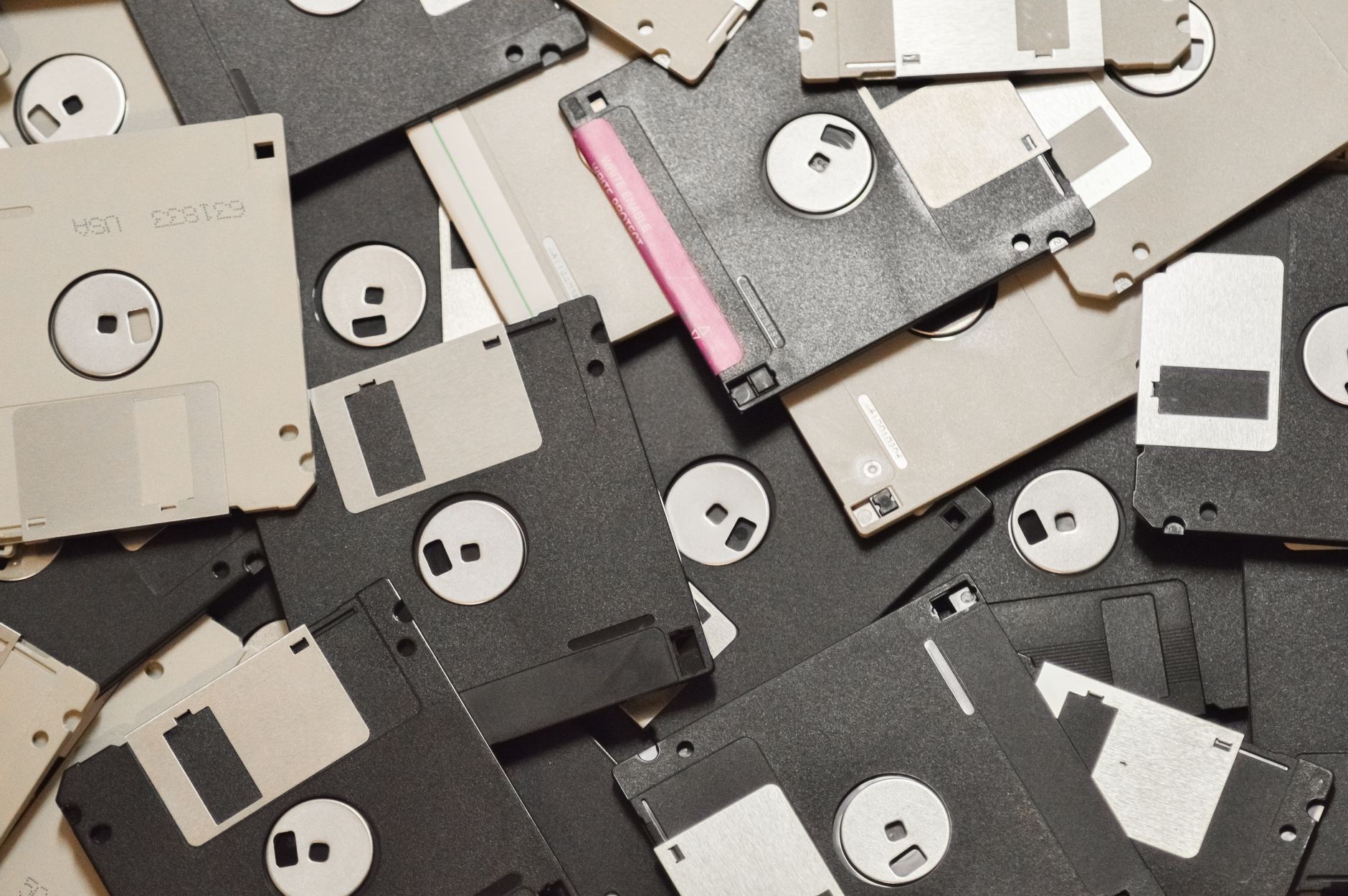
Floppy disks are a prime example of composite materials creating recycling challenges. A standard 3.5-inch floppy disk consists of a magnetic Mylar disk (typically polyethylene terephthalate, PET, coated with a ferro-magnetic material like iron oxide), encased in a hard PVC plastic shell. This shell features a metal hub, a spring-loaded metal shutter, and often a felt or fabric liner. The 5.25-inch and 8-inch variants had simpler constructions with flexible jackets, but still involved multiple materials. The primary difficulty in recycling lies in separating these disparate components. The magnetic coating on the Mylar, while thin, is a contaminant for general plastic recycling streams. Traditional recycling facilities equipped for single-stream plastics or metals struggle with this multi-layer, multi-material item. Specialized electronics recyclers, however, are equipped to handle such composites. Their process typically involves initial sorting, followed by mechanical shredding. After shredding, advanced separation techniques, such as eddy current separators for metals and air classifiers for plastics, attempt to isolate different material fractions. The magnetic media itself often ends up in a mixed residual stream, sometimes incinerated for energy recovery, or landfilled if no further separation is economically viable. The goal is to minimize landfill contribution and recover as much reusable material as possible, despite the inherent complexities of their original design.
Find NAID AAA certified electronics recyclers for secure data destruction and responsible e-waste disposal.
Chronological Timeline
IBM introduces the 8-inch 'memory disk', initially for loading microcode, later for data storage.
Shugart Associates releases the 5.25-inch floppy disk drive and media, leading to widespread adoption in early personal computers.
Sony introduces the 3.5-inch floppy disk with its rigid shell, eventually becoming the industry standard.
Peak usage of floppy disks, becoming the primary removable storage medium for software distribution and data transfer.
CD-R/RW drives, USB flash drives, and internet downloads begin to rapidly displace floppy disks for data storage and transfer.
Sony, the last major manufacturer, ceases production of 3.5-inch floppy disks.
Frequently Asked Questions
Can floppy disks still be recycled?
How do I securely erase data from floppy disks?
What are floppy disks made of?
Where can I find a floppy disk recycler?
Daily Specs Editorial Staff
Lead Technical Analyst & Hardware Researcher
The Daily Specs editorial staff compiles, benchmarks, and verifies emerging technical specifications directly from system architecture manuals, hardware datasheets, and open-source codebases to deliver high-gain technical intelligence.