SpaceX Launch Today: Falcon 9 Missions & Tech Deep Dive
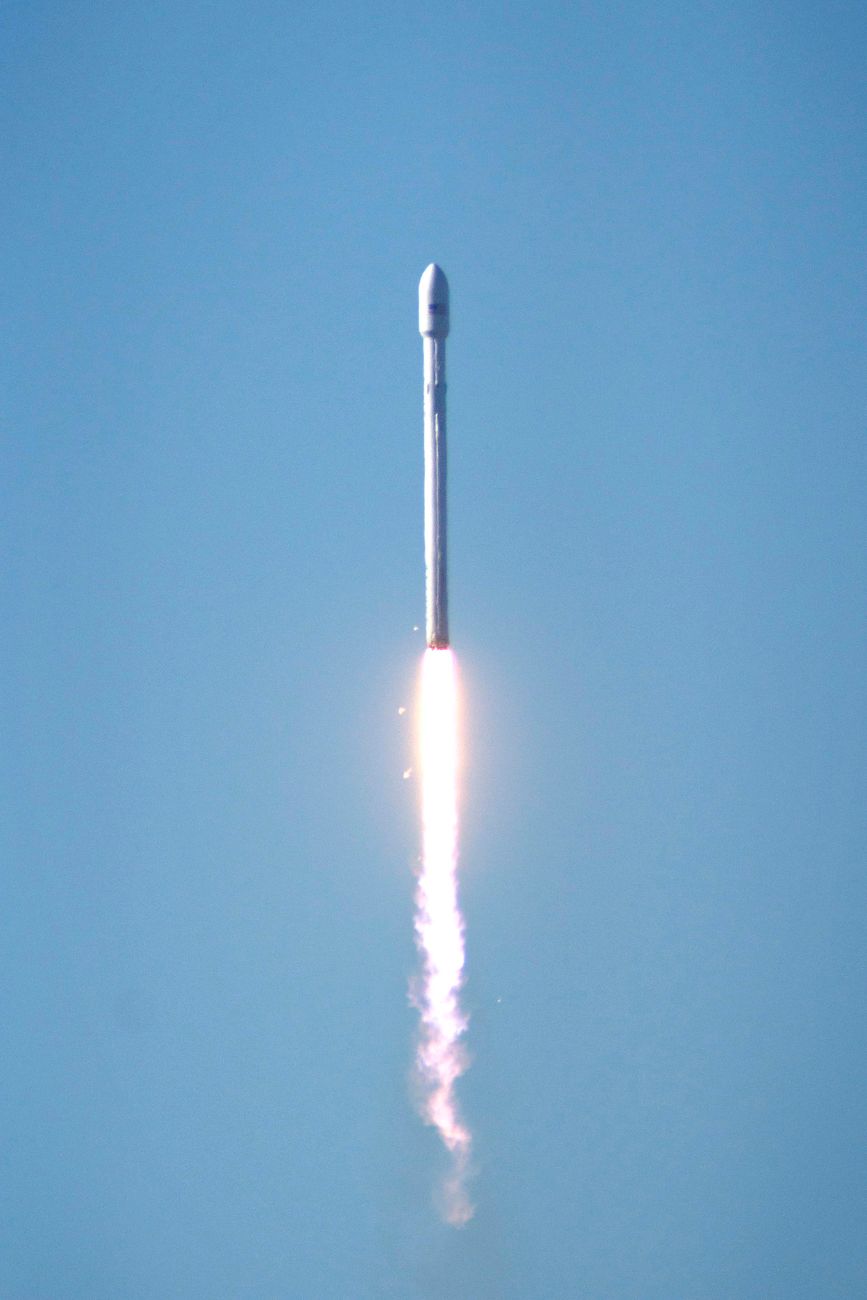
Key Takeaways
- •SpaceX's Falcon 9 Block 5 is the industry standard for reliable, reusable orbital launches, significantly reducing mission costs.
- •Starlink missions form the backbone of SpaceX's launch cadence, deploying thousands of satellites for global internet connectivity.
- •Advanced reusability, including booster landings on autonomous drone ships and fairing recovery, defines SpaceX's operational efficiency.
- •Launches from both Vandenberg Space Force Base and Cape Canaveral cater to diverse orbital inclinations, from polar to equatorial.
Technical Specifications & Data
| Rocket Type | Reusable Medium-Lift Launch Vehicle |
| Height | 70 m (229.6 ft) |
| Diameter | 3.7 m (12 ft) |
| Stages | 2 |
| First Stage Engines | 9 × Merlin 1D (sea level) |
| Second Stage Engine | 1 × Merlin 1D Vacuum |
| First Stage Thrust (Sea Level) | 7,607 kN (1,710,000 lbf) |
| Propellants | Liquid Oxygen (LOX) / Rocket Propellant-1 (RP-1) |
| Payload Capacity (LEO - Expendable) | 22,800 kg (50,265 lb) |
| Payload Capacity (LEO - Reusable) | ~15,600 kg (34,392 lb) |
| Payload Capacity (GTO - Expendable) | 8,300 kg (18,300 lb) |
| Payload Capacity (GTO - Reusable) | ~5,500 kg (12,125 lb) |
| Reusability | First stage booster & payload fairings |
| Landing Platforms | Autonomous Spaceport Drone Ship (ASDS) or Landing Zones (LZ) |
Understanding Today's SpaceX Missions
SpaceX continues to dominate the commercial and government launch sectors with a relentless operational tempo. While specific launch schedules are dynamic and subject to change based on mission readiness and weather, the underlying patterns remain consistent. A significant portion of 'today's' or recent SpaceX launches are dedicated to deploying the company's own Starlink broadband internet satellites. These missions, often carrying 20-30+ satellites at a time, bolster the rapidly expanding Starlink constellation, aiming to provide global internet access, especially to underserved regions.
Beyond Starlink, SpaceX regularly executes missions for a diverse range of clients. These include deploying geostationary communications satellites for commercial operators, launching national security payloads for government agencies like the US Space Force, and ferrying cargo and crew to the International Space Station aboard Dragon spacecraft. Launch sites are strategically chosen: Vandenberg Space Force Base in California is typically used for polar or sun-synchronous orbits, ideal for Earth observation and remote sensing satellites, while Cape Canaveral Space Force Station and Kennedy Space Center in Florida support eastward launches for lower inclination orbits, perfect for Starlink, GTO satellites, and ISS missions. This dual-site capability allows SpaceX to address nearly any orbital requirement.
Falcon 9: The Workhorse of Modern Spaceflight
At the heart of SpaceX's current operations is the Falcon 9 Block 5, a two-stage-to-orbit medium-lift launch vehicle designed for maximum reliability and reusability. The Block 5 iteration represents the culmination of years of iterative improvements, making it the most capable and robust version of the Falcon 9. Its first stage is powered by nine Merlin 1D engines, generating immense thrust with a combination of liquid oxygen (LOX) and refined kerosene (RP-1) propellants. The second stage, powered by a single Merlin 1D Vacuum engine, is responsible for placing payloads into their precise orbital trajectories.
The defining characteristic of the Falcon 9 Block 5 is its advanced reusability. The first stage booster is engineered to perform a propulsive landing after separating from the second stage, either on an autonomous drone ship offshore or at a designated landing zone on land. This capability, coupled with the recovery of the rocket's payload fairings, dramatically reduces launch costs and enables an unprecedented launch cadence. The Block 5 specifically features upgrades such as more robust heat shielding, improved engine performance, upgraded landing legs, and enhanced structural integrity, all contributing to its ability to fly multiple times with minimal refurbishment between missions.
Starlink & Beyond: Diverse Payloads and Their Impact
While Starlink missions are frequent, they represent only one facet of SpaceX's comprehensive launch manifest. Starlink itself is a revolutionary satellite internet constellation operating in Low Earth Orbit (LEO), designed to deliver high-speed, low-latency broadband internet globally. Each Starlink satellite is a sophisticated piece of technology, featuring phased array antennas, inter-satellite laser links, and ion thrusters for orbit maneuvering, collectively forming a mesh network that blankets the Earth.
Beyond its own constellation, SpaceX actively supports a broad spectrum of critical missions. This includes launching large geostationary satellites for telecommunications companies, enabling services like television broadcasting and secure data transfer. They also provide launch services for various government and scientific payloads, from Earth observation satellites monitoring climate change to technology demonstration missions pushing the boundaries of space exploration. Furthermore, the Falcon 9 is the primary launch vehicle for SpaceX's Dragon spacecraft, which routinely transports vital cargo and astronauts to and from the International Space Station, ensuring continuous human presence in orbit and advancing scientific research.
Why This Matters & Unique Technical Insights
The frequent operations of SpaceX, underpinned by the Falcon 9 Block 5, signify a paradigm shift in space access, with several unique technical insights driving this revolution. The economic impact of reusability cannot be overstated: by recovering and reusing costly components like the first-stage booster and fairings, SpaceX drastically lowers the marginal cost per launch, making space more accessible and fostering innovation across the industry. This contrasts sharply with traditional expendable rockets where every component is discarded.
A key technical enabler for booster recovery are the Autonomous Spaceport Drone Ships (ASDS) – vessels like 'Of Course I Still Love You' (OCISLY) and 'Just Read the Instructions' (JRTI). These highly sophisticated platforms are equipped with powerful thrusters for dynamic positioning, ensuring they maintain a precise location even in rough seas, providing a stable landing pad hundreds of kilometers offshore. The precision required for a 70-meter rocket to land vertically on a football-field-sized moving target, guided by advanced navigation and control algorithms, is a testament to cutting-edge engineering.
Moreover, the Falcon 9 Block 5's design for rapid turnaround is crucial. Engineers can perform inspections and necessary refurbishments on a recovered booster within weeks, sometimes even days, facilitating a high launch cadence. This capability is supported by specific Block 5 upgrades, such as robust octagonal grid fins made of titanium for better heat resistance, and an improved thermal protection system. The ability to launch from multiple sites like SLC-4E at Vandenberg and SLC-40/39A at Cape Canaveral allows for optimized trajectories based on the required orbital inclination, demonstrating unparalleled logistical and operational flexibility in modern spaceflight.
Explore the future of space exploration and support aerospace innovation.
Chronological Timeline
Liftoff: Falcon 9 engines ignite and rocket ascends.
Max Q: Rocket experiences maximum dynamic pressure on its structure.
MECO & Stage Separation: Main engines cut off, first and second stages separate.
SES-1: Second stage engine ignites to continue ascent to orbit.
First Stage Landing: Booster performs entry and landing burns, touching down on an ASDS or LZ.
SECO-1 & Payload Deployment: Second stage engine cuts off, payload(s) deployed into target orbit.
Frequently Asked Questions
What is the Falcon 9 Block 5?
What is Starlink?
How often does SpaceX launch?
What are SpaceX's drone ships?
Daily Specs Editorial Staff
Lead Technical Analyst & Hardware Researcher
The Daily Specs editorial staff compiles, benchmarks, and verifies emerging technical specifications directly from system architecture manuals, hardware datasheets, and open-source codebases to deliver high-gain technical intelligence.