Brain Waves: Unlocking Neural Computation Secrets
Key Takeaways
- •Brain activity manifests as surprisingly complex, structured waves that are critical for neural computation, not merely noise.
- •Advanced neuroimaging and computational models are revealing these spatio-temporal patterns, offering new insights into brain function.
- •Understanding these intricate wave dynamics holds profound implications for AI, neuroprosthetics, and treating neurological disorders.
- •The transition from local, isolated processing to dynamic, global wave-based computation represents a paradigm shift in neuroscience.
Technical Specifications & Data
| Brain Wave Type | Gamma (30-100+ Hz) & High Gamma (up to 200 Hz) |
| Associated Cognitive Function | Feature binding, attention, conscious perception, information processing |
| EEG Sampling Rate (Research Grade) | Typically 1,000 - 10,000 Hz per channel |
| EEG Channels (High-Density) | Up to 256 or 512 electrodes for full head coverage |
| MEG Spatial Resolution (Cortical) | Millimeter-level (2-5 mm) for superficial sources |
| ECoG Spatial Resolution (Intracranial) | Sub-millimeter (0.5-1 mm) with direct cortical contact |
| Typical Traveling Wave Speed (Cortical Alpha) | 0.1 - 1.0 meters per second (m/s) |
| Phase-Amplitude Coupling (PAC) Metrics | Modulation Index (MI), Mean Vector Length (MVL), Phase Locking Value (PLV) |
| Data Acquisition Throughput (Raw EEG/MEG) | Approx. 1 GB/hour per subject (depending on channels/sampling) |
| Computational Models for Waves | Mean-field models, Spiking Neural Networks (SNNs), Coupled Oscillator Models |
| Key Signal Processing Algorithms | Wavelet Transform, Independent Component Analysis (ICA), Granger Causality |
Technical Architecture Overview: The Brain's Oscillatory Symphony
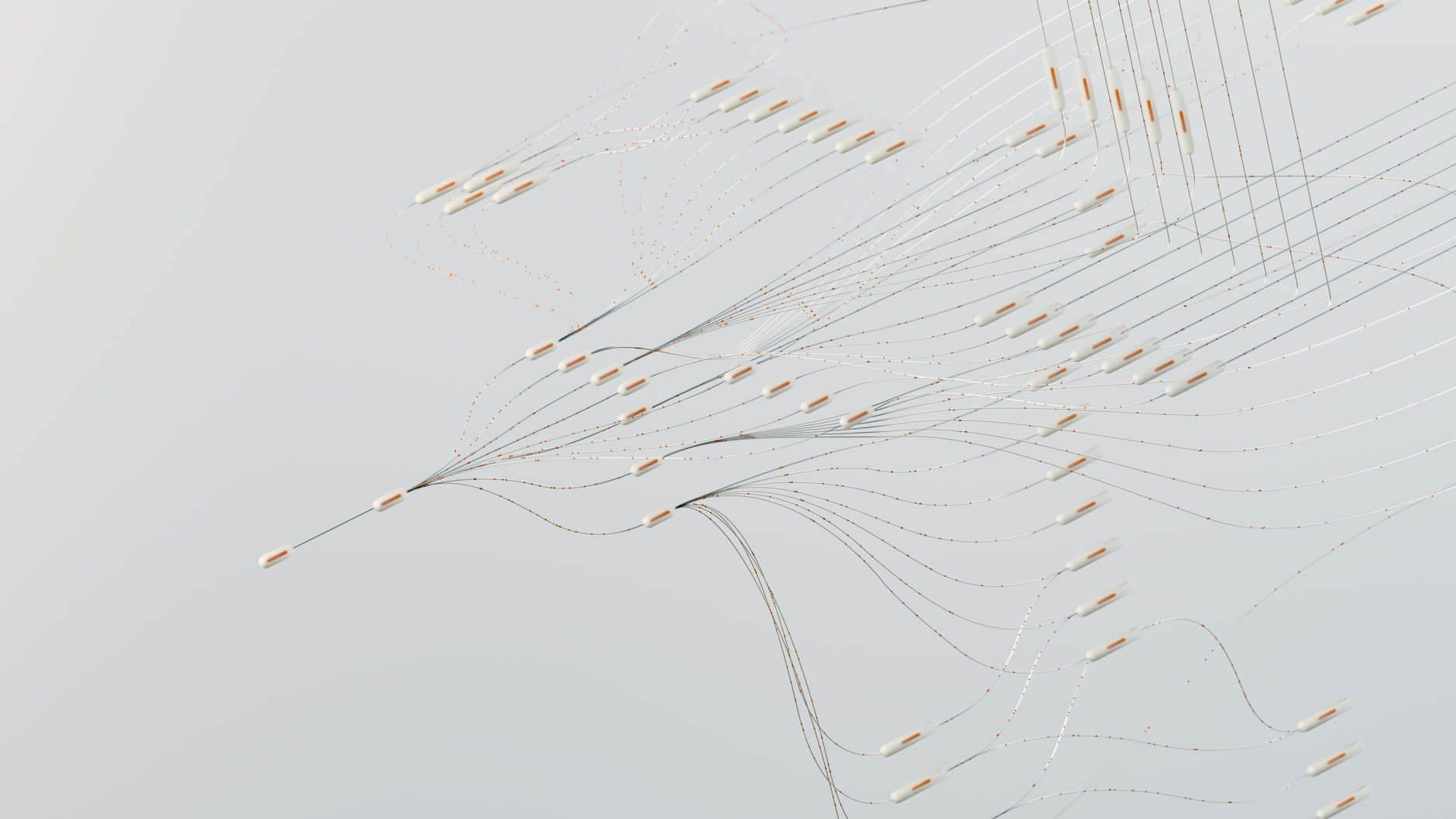
For decades, neuroscientists viewed brain waves—the rhythmic electrical activity detected across the scalp or within neural tissue—primarily as simple oscillations, reflecting a baseline state or general arousal. However, groundbreaking research employing advanced imaging and analytical techniques has unveiled a far more intricate and dynamic landscape. These are not merely uniform 'humming' patterns but highly organized, propagating waves of activity, akin to an internal computational architecture. This paradigm shift posits that these spatio-temporal patterns of neural activity are fundamental to how the brain processes information, stores memories, and generates consciousness.
At the core of these complex waves lies the coordinated activity of billions of neurons. Individual neurons communicate via electrical impulses, but it is their collective, synchronized firing that gives rise to macroscopic brain waves. Key methodologies like Electroencephalography (EEG), Magnetoencephalography (MEG), and Electrocorticography (ECoG) are crucial for observing these phenomena. While EEG measures electrical potentials from the scalp, MEG detects magnetic fields generated by neural currents, offering superior spatial resolution for cortical sources and reduced distortion from the skull. ECoG, an invasive technique, places electrodes directly on the brain's surface, providing unparalleled spatial (down to ~1mm) and temporal (millisecond) resolution, critical for detailed analysis of wave propagation.
The 'complexity' stems from several factors:
- Traveling Waves: Unlike standing waves, these are patterns of activity that move across the brain's surface, often in spirals or planar fronts. These are thought to facilitate information transfer across distant brain regions and regulate local computations.
- Phase Coupling & Cross-Frequency Interactions: Different frequency bands (e.g., theta, alpha, beta, gamma) are not isolated but interact, with the phase of lower frequency waves modulating the amplitude of higher frequency waves. This mechanism, often referred to as 'phase-amplitude coupling', is hypothesized to bind diverse neural computations.
- Dynamic Reconfiguration: The brain's functional networks are not static. The patterns of these complex waves dynamically reconfigure based on task demands, cognitive states, and sensory input, reflecting the brain's remarkable adaptability.
Understanding this 'oscillatory symphony' means moving beyond analyzing isolated peaks and troughs, towards deciphering the intricate choreography of neural populations across space and time. This involves sophisticated signal processing to identify wave origins, trajectories, and interactions, paving the way for a deeper understanding of brain function and dysfunction.
Deep-Dive Systems & Performance Benchmarks in Wave Analysis
Analyzing the surprisingly complex waves within the brain demands sophisticated computational systems and advanced signal processing techniques that far exceed traditional spectral analysis. The goal is to extract meaningful information from high-dimensional, noisy data, pinpointing not just *what* frequencies are present, but *how* they interact and propagate. Typical data acquisition rates for research-grade EEG systems range from 1 kHz to 10 kHz per channel, with up to 256 channels, leading to raw data streams often exceeding 1 GB/hour per participant. MEG systems, with hundreds of gradiometers and magnetometers, generate similar or even larger datasets. Processing this volume of data, especially for real-time analysis, necessitates high-performance computing clusters.
Key analytical methodologies include:
- Time-Frequency Analysis: Techniques like
Wavelet Transform (e.g., Morlet wavelets)orShort-Time Fourier Transform (STFT)are used to visualize how different frequency components change over time. This is crucial for identifying transient oscillations and cross-frequency coupling. - Source Localization: The 'inverse problem' in EEG/MEG involves estimating the neural sources within the brain that generate the observed scalp potentials or magnetic fields. Algorithms like
Minimum Norm Estimates (MNE),sLORETA (Standardized Low Resolution Brain Electromagnetic Tomography), andbeamforming techniques (e.g., DICS, SAM)are employed, each with varying computational demands and spatial resolution trade-offs. Achieving sub-centimeter resolution in source space is a key performance benchmark. - Connectivity Analysis: To understand how different brain regions interact via these waves, metrics like
Phase Lag Index (PLI),Weighted Phase Lag Index (wPLI),Granger Causality, andTransfer Entropyare computed. These quantify directed or undirected information flow, revealing dynamic functional networks. Graph theoretical approaches are then applied to characterize network topology (e.g., small-worldness, modularity).Example: Brain Network Analysis Pipeline (Simplified)1. Data Acquisition (EEG/MEG)2. Preprocessing (Noise reduction, artifact rejection)3. Source Localization (e.g., MNE, sLORETA)4. Time-Frequency Decomposition (Wavelets)5. Connectivity Estimation (PLI, Granger)6. Graph Theory Metrics Calculation7. Statistical Inference & Visualization - Traveling Wave Detection & Characterization: Specific algorithms are designed to identify and track the propagation of oscillatory activity across electrode arrays. This often involves
phase gradient analysisormulti-site phase coherence methods, allowing researchers to calculate wave speed (e.g., 0.1-1.0 m/s for cortical alpha waves) and directionality. The computational load for these analyses is significant, especially when considering permutations for statistical validation.
Computational neuroscience models, such as
mean-field models or large-scale spiking neural networks (SNNs), are used to simulate wave generation and propagation. These models can involve millions of simulated neurons and synapses, requiring supercomputing resources for accurate parameter fitting and exploration of wave dynamics under various conditions. Performance benchmarks for these simulations often relate to the fidelity of replicating empirical data and the efficiency of exploring parameter space.Why This Matters & Industry Impact: From Neuroscience to AI
The revelation of surprisingly complex brain waves is not merely an academic curiosity; it represents a fundamental shift in our understanding of brain function with profound implications across neuroscience, artificial intelligence, and clinical medicine. This new perspective moves beyond the idea of localized, modular brain functions towards a more dynamic, distributed model where information is encoded and processed through the interplay of propagating oscillatory patterns. This understanding is poised to drive significant advancements in several key areas.
In Neuroscience and Cognitive Science, deciphering these complex waves could unlock mysteries surrounding consciousness, attention, memory consolidation, and decision-making. For instance, traveling waves are hypothesized to act as a 'neural highway,' efficiently shuttling information between cortical regions, or as 'clocking signals' that segment continuous sensory input into discrete processing units. A deeper understanding of phase-amplitude coupling could illuminate how the brain integrates information across different timescales, binding disparate features into coherent perceptions.
For Artificial Intelligence and Machine Learning, the brain's wave-based computational architecture offers novel inspiration. Current neural networks are largely static in their connectivity and often lack the dynamic, temporal processing capabilities observed in biological brains. Bio-inspired AI models that incorporate principles of traveling waves, oscillatory synchrony, and phase-dependent computation could lead to more robust, energy-efficient, and adaptable AI systems, particularly in areas like real-time pattern recognition, sequence learning, and dynamic control. The development of Spiking Neural Networks (SNNs) and neuromorphic hardware is directly informed by these biological insights, aiming to replicate the brain's event-driven, low-power processing.
In Clinical Applications and Neurotechnology, this research is paving the way for novel diagnostic tools and therapeutic interventions. Neurological and psychiatric disorders such as epilepsy, Parkinson's disease, schizophrenia, and depression are often characterized by disrupted brain rhythms and abnormal wave patterns. Identifying specific signatures of these complex waves could lead to earlier diagnosis, more precise biomarkers for disease progression, and personalized treatments. For example, targeted Deep Brain Stimulation (DBS) or Transcranial Magnetic Stimulation (TMS) protocols could be refined to correct aberrant wave propagation or re-establish healthy oscillatory dynamics. Furthermore, Brain-Computer Interfaces (BCIs), which currently often rely on detecting simple amplitude changes, could become significantly more powerful and nuanced by leveraging the information encoded in the phase, speed, and directionality of complex brain waves, enhancing control of prosthetics or communication devices. The commercial neurotech sector is keenly watching, with companies exploring advanced EEG/MEG for neurofeedback and cognitive enhancement, moving beyond rudimentary 'meditation' apps to precise, wave-pattern-guided interventions.
Explore advanced neurotech solutions and AI platforms inspired by brain wave research to push the boundaries of cognitive computing.
Chronological Timeline
Hans Berger publishes the first human electroencephalogram (EEG), identifying Alpha and Beta rhythms.
David Cohen detects the first human magnetoencephalogram (MEG) signals, paving the way for non-invasive magnetic brain activity measurement.
Development of advanced signal processing techniques (e.g., wavelet analysis, independent component analysis) enabling deeper insights into oscillatory dynamics beyond simple frequency bands.
Resurgence of interest in 'traveling waves' in the brain, with new evidence from high-density EEG/MEG and ECoG revealing their prevalence and functional significance.
Focus on cross-frequency coupling, brain network dynamics, and computational modeling of complex wave interactions as fundamental to cognitive processes.
Frequently Asked Questions
What are 'complex' brain waves, and how do they differ from basic oscillations?
What technologies are essential for studying these intricate brain wave patterns?
How can understanding complex brain waves impact Artificial Intelligence?
What is 'phase-amplitude coupling' in the context of brain waves?
Daily Specs Editorial Staff
Lead Technical Analyst & Hardware Researcher
The Daily Specs editorial staff compiles, benchmarks, and verifies emerging technical specifications directly from system architecture manuals, hardware datasheets, and open-source codebases to deliver high-gain technical intelligence.