Tesla Roadster: Hypercar Redefined – Specs & Deep Dive
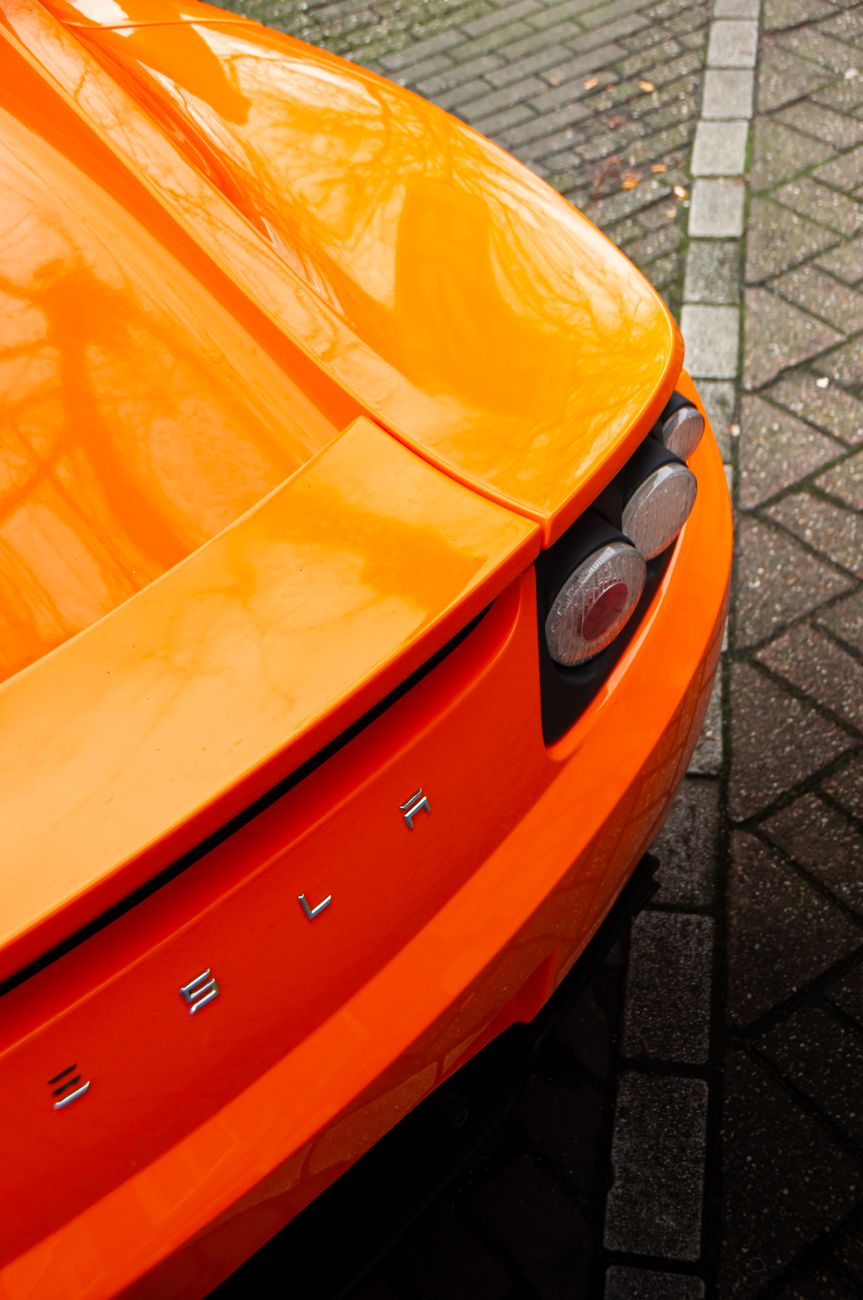
Key Takeaways
- •The new Tesla Roadster aims to be the fastest production car ever, achieving 0-60 mph in 1.9 seconds.
- •It boasts an industry-leading 620-mile (1,000 km) range, challenging traditional EV range anxiety.
- •The optional 'SpaceX Package' introduces cold gas thrusters, promising unprecedented acceleration and handling capabilities.
- •Its tri-motor, all-wheel-drive system delivers immense power, redefining performance benchmarks for electric vehicles.
Technical Specifications & Data
| Planned Model Year | 2025 (Initial production est.) |
| Battery Capacity | 200 kWh |
| EPA Estimated Range | 620 miles (1,000 km) |
| 0-60 mph Acceleration | 1.9 seconds |
| 0-100 mph Acceleration | 4.2 seconds |
| Quarter-Mile Time | 8.8 seconds |
| Top Speed | Over 250 mph (400 km/h) |
| Peak Wheel Torque | 10,000 Nm |
| Motor Configuration | Tri-motor (1 front, 2 rear) |
| Drivetrain | All-Wheel Drive (AWD) |
| Seating Capacity | 2+2 (removable glass roof) |
| Special Package Option | SpaceX Package (cold gas thrusters) |
Technical Architecture Overview: Engineering an Electric Beast
The second-generation Tesla Roadster, unveiled as a surprise at the Tesla Semi event in 2017, represents a radical departure from its Lotus Elise-derived predecessor. It's an ambitious statement, designed from the ground up to shatter existing performance benchmarks for production vehicles, regardless of powertrain. At its core, the Roadster employs a sophisticated 2+2 seating configuration, offering a degree of practicality rarely seen in hypercars, complemented by a removable glass roof that stows in the trunk.
Central to its groundbreaking capabilities is the massive 200 kWh battery pack, which is substantially larger than any other passenger EV battery on the market. This colossal energy reservoir is not merely about capacity; its advanced architecture, likely utilizing Tesla's cutting-edge 4680 cells or a similar high-density design, is engineered for extreme power delivery and efficient thermal management. The pack's integration into the vehicle's floor contributes to an exceptionally low center of gravity, enhancing stability and handling dynamics. Furthermore, its anticipated 800V architecture could enable rapid charging capabilities, minimizing downtime despite the large battery size.
Propulsion comes from a formidable tri-motor all-wheel-drive (AWD) system. This configuration typically involves one motor driving the front axle and two independent motors driving the rear wheels. This setup allows for advanced torque vectoring, precisely distributing power to each wheel to optimize traction, cornering, and stability. The instant, massive torque output inherent to electric motors, combined with sophisticated software controls, provides an unparalleled responsiveness. The chassis itself is rumored to leverage advanced lightweight materials, potentially a carbon fiber monocoque or extensive use of aluminum, to manage the vehicle's weight despite its large battery, aiming for optimal power-to-weight ratio and structural rigidity to handle the extreme forces it's designed to generate.
Deep-Dive Systems & Performance Benchmarks: Beyond Hypercar
The performance metrics touted for the new Tesla Roadster are nothing short of revolutionary, pushing the boundaries of what's conceivable for a road-legal vehicle. Tesla claims a blistering 0-60 mph acceleration in just 1.9 seconds, making it the fastest accelerating production car on Earth. This is achieved through the instantaneous torque delivery of its electric motors and the sophisticated traction control systems. Further breaking down its acceleration, the Roadster is projected to reach 0-100 mph in a mere 4.2 seconds and complete the quarter-mile in an astounding 8.8 seconds. These figures place it firmly in drag-racing territory, often surpassing purpose-built supercars and even some top-tier dragsters.
The Roadster's top speed is estimated to be over 250 mph, with some speculation placing it closer to 260 mph or even higher. This isn't just about raw power; it also speaks to the vehicle's aerodynamic efficiency and thermal management systems that allow sustained high-speed performance. Crucially, the peak wheel torque is stated at an astronomical 10,000 Nm. This isn't engine torque, but the actual twisting force delivered at the wheels, providing neck-snapping acceleration and immense traction off the line.
Beyond raw speed, the Roadster's systems are designed for comprehensive performance. It features a high-performance braking system, likely employing large carbon-ceramic rotors and multi-piston calipers, essential for reining in its incredible momentum. The suspension system is expected to be an adaptive air suspension, capable of adjusting ride height and stiffness dynamically for optimal performance in various driving conditions, from track racing to comfortable cruising. The vehicle's advanced computer hardware, including Tesla's latest Full Self-Driving (FSD) chip, will not only enable advanced driver-assistance features but also meticulously manage power delivery, battery thermal regulation, and vehicle dynamics in real-time. The enormous 200 kWh battery pack doesn't just enable performance; it delivers an astonishing 620 miles (1,000 km) of highway range, virtually eliminating range anxiety for long journeys in a high-performance EV.
Perhaps the most audacious and 'information gain' rich feature is the optional 'SpaceX Package'. This package is rumored to include up to ten cold gas thrusters derived from SpaceX rocket technology, strategically placed around the vehicle. These thrusters, powered by compressed air, are intended to provide bursts of thrust for enhanced acceleration, extreme cornering capabilities, and even incredibly short braking distances. Elon Musk has even hinted at the possibility of limited 'hovering' capability. This innovative integration of aerospace technology into an automotive platform represents an unprecedented leap in vehicle dynamics, promising a driving experience unlike anything seen before.
Why This Matters & Industry Impact: Redefining Automotive Excellence
The Tesla Roadster is far more than just another fast car; it's a profound statement on the future of automotive engineering and a potent disruptor to established segments. Its projected performance metrics directly challenge the reign of traditional internal combustion engine (ICE) hypercars from manufacturers like Bugatti, Koenigsegg, and Ferrari. By achieving 0-60 mph in 1.9 seconds and boasting a 620-mile range, the Roadster effectively silences two common criticisms against EVs: lack of ultimate performance and limited range. This forces the entire automotive industry, especially high-performance divisions, to re-evaluate their electrification strategies and accelerate their own R&D into extreme EV performance.
From a technological standpoint, the Roadster serves as a showcase of Tesla's engineering prowess and a testbed for future innovations. The immense 200 kWh battery pack, the sophisticated tri-motor drivetrain, and particularly the audacious 'SpaceX Package' with its cold gas thrusters, push the boundaries of what is mechanically and dynamically possible in a production vehicle. These advancements, once proven in a halo product like the Roadster, can trickle down into mainstream EV models, improving efficiency, range, and performance for a broader consumer base. For example, advancements in battery density and thermal management developed for the Roadster could lead to lighter, more efficient batteries for future Tesla vehicles.
Economically and strategically, the Roadster solidifies Tesla's position not just as a mass-market EV producer, but as a leader in high-performance luxury and cutting-edge technology. It attracts a different demographic of buyer – one seeking extreme performance combined with sustainability and technological innovation. This expansion into the hypercar segment enhances Tesla's brand perception, reinforcing its image as an innovator rather than just an alternative. The fact that an electric vehicle can potentially outperform nearly any ICE vehicle, while also offering zero emissions, sends a powerful message about the viability and superiority of electric powertrains in the long run. The Roadster is not just a car; it's a harbinger of a fully electric, high-performance future, compelling the rest of the industry to adapt or be left behind. Its existence validates the immense potential of electric propulsion to surpass the performance ceilings once thought exclusive to fossil fuels, fundamentally changing the narrative around sustainable mobility.
Explore the future of automotive engineering with Tesla's latest innovations – check out the full lineup and pre-order opportunities!
Chronological Timeline
Tesla unveils the second-generation Roadster as a surprise during the Tesla Semi event, showcasing a prototype and announcing initial performance targets.
Reservations open for the new Roadster, with a base reservation fee of $50,000 and a full 'Founders Series' reservation at $250,000.
Elon Musk initially targets 2020-2021 for the start of Roadster production, but this timeline faces multiple delays due to engineering challenges and supply chain issues.
Elon Musk confirms that production of the Roadster is delayed, indicating that it will follow Cybertruck and Semi production, with a new target for final engineering and potential production in 2024-2025.
Frequently Asked Questions
When will the new Tesla Roadster be released?
What makes the Roadster's performance so extreme?
What is the 'SpaceX Package' for the Roadster?
Daily Specs Editorial Staff
Lead Technical Analyst & Hardware Researcher
The Daily Specs editorial staff compiles, benchmarks, and verifies emerging technical specifications directly from system architecture manuals, hardware datasheets, and open-source codebases to deliver high-gain technical intelligence.