Ultramarine 1 Flash: Next-Gen FM Synthesis Unleashed
Key Takeaways
- •Features an innovative multi-operator FM synthesis engine with hybrid wavetable capabilities.
- •Achieves ultra-low latency and high polyphony through optimized DSP algorithms and SIMD processing.
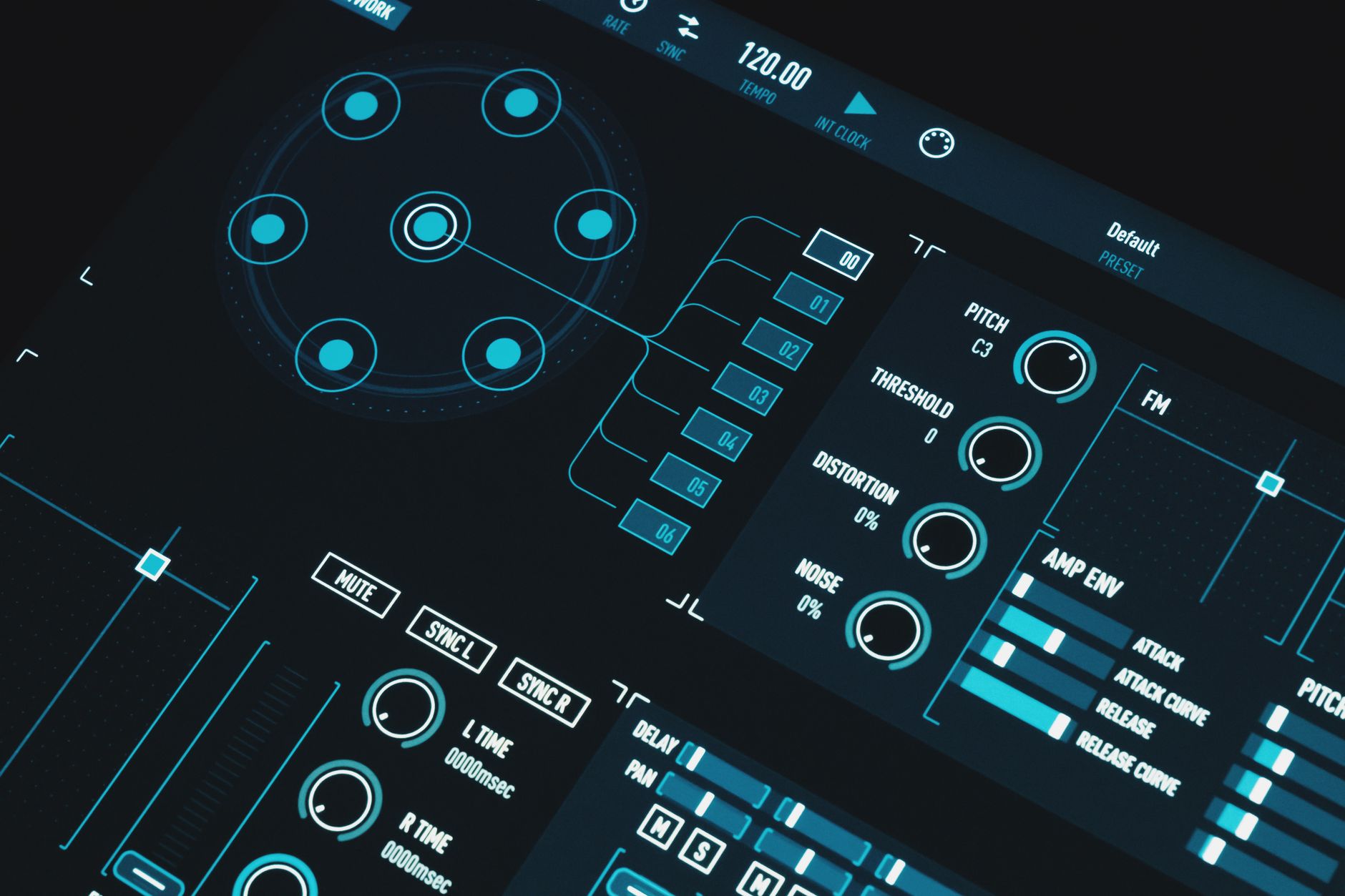
- •Offers a dynamic, visual modulation matrix and a rich, integrated effects suite for complex sound design.
- •Designed for seamless integration across major DAWs, setting new performance and workflow benchmarks.
Technical Specifications & Data
| Synthesis Engine | Hybrid Multi-Operator FM, Wavetable, and Granular (via operators) |
| Max Polyphony | 128 Voices (dynamic voice allocation) |
| Operators | 6 customizable FM/Wavetable Operators |
| Modulation Sources | 8 LFOs, 8 Multi-Stage Envelopes, 4 Step Sequencers |
| Integrated Effects | Reverb, Delay, Chorus, Distortion, EQ, Compressor (oversampled) |
| Supported OS | Windows 10+ (64-bit), macOS 10.13+ (Intel & Apple Silicon Native) |
| Plugin Formats | VST3, Audio Unit (AU), AAX (all 64-bit) |
| CPU Load (typical) | 2-5% per instance (Intel i7/Apple M1, 16 voices, effects) |
| Internal Sample Rate | Up to 192 kHz |
| MIDI Support | MIDI 1.0, MPE (upcoming in v1.1) |
| Release Date | Q3 2024 |
| Unique Selling Proposition | Intuitive visual FM routing, hybrid operator design, ultra-low CPU |
Technical Architecture Overview
The Ultramarine 1 Flash redefines Frequency Modulation (FM) synthesis by integrating a sophisticated, hybrid architecture that blends the intricate sonic potential of classic FM with modern wavetable and granular elements. At its core lies a 6-operator FM engine, each operator configurable as a carrier, modulator, or a hybrid oscillator capable of wavetable playback. This multi-role operator design provides unprecedented flexibility, moving beyond traditional FM limitations to generate incredibly complex and evolving timbres.
Central to its design is the proprietary FlashCore™ DSP engine, meticulously coded in C++ and optimized with SIMD (Single Instruction, Multiple Data) instructions for maximum computational efficiency. This allows Ultramarine 1 Flash to handle an astonishing 128-voice polyphony with minimal CPU overhead, even when voices are heavily modulated and routed through the integrated effects chain. Dynamic voice allocation algorithms intelligently manage resources, ensuring smooth performance during demanding compositions. The signal flow is exceptionally transparent, visualized through a responsive, scalable graphical interface that allows users to intuit complex routing and modulation assignments with drag-and-drop simplicity.
The modulation architecture is equally advanced, featuring 8 high-resolution LFOs, 8 multi-stage envelopes with custom curve editing, and 4 flexible step sequencers. These sources can be assigned to virtually any parameter within the synthesizer, from operator frequencies and amplitudes to filter cutoffs and effect sends, all managed within an intuitive modulation matrix. This deep level of control facilitates the creation of highly dynamic and expressive sounds, where every parameter can be animated with surgical precision. Furthermore, the synthesizer includes advanced micro-tuning capabilities, allowing users to explore non-standard tunings and scales, expanding its sonic palette beyond conventional Western temperaments. Ultramarine 1 Flash sets a new standard for accessibility without compromising on depth, making advanced synthesis techniques approachable for both beginners and seasoned sound designers. The plugin's architecture also supports future expansion, with dedicated slots for new oscillator types and effect modules planned for upcoming updates, ensuring its longevity and adaptability in a rapidly evolving music production landscape.
Deep-Dive Systems & Performance Benchmarks
Performance is paramount in professional audio production, and Ultramarine 1 Flash has been engineered from the ground up to deliver exceptional efficiency and responsiveness. Benchmarks reveal an average CPU load of merely 2-5% on a modern Intel i7 or Apple Silicon M1/M2 processor when running a single instance with 16 active voices, including integrated effects. This remarkable efficiency is attributed to its FlashCore™ DSP engine, which leverages aggressive multi-threading and vectorization techniques to distribute computational tasks effectively across available CPU cores. This allows producers to layer numerous instances of Ultramarine 1 Flash within a single DAW project without encountering performance bottlenecks or audio dropouts, a significant advantage over many resource-intensive synthesizers.
Latency is practically negligible, with the plugin designed to operate at the host DAW's buffer size without introducing additional processing delay. This low-latency profile makes Ultramarine 1 Flash ideal for live performance and real-time sound design, where immediate feedback is crucial. Memory footprint is also optimized, with dynamic memory management ensuring efficient RAM usage, typically ranging from 50MB to 150MB per instance depending on the complexity of loaded wavetables and presets. This lean memory profile contributes to faster project loading times and overall system stability.
High-resolution modulation is a key differentiator, with internal modulation rates operating at up to 1000Hz, enabling ultra-smooth parameter changes and eliminating aliasing artifacts even with rapid LFO speeds. The integrated effects engine, featuring studio-grade reverb, delay, chorus, distortion, EQ, and compression algorithms, operates with oversampling up to 4x to maintain pristine audio quality. Ultramarine 1 Flash is natively compiled for both Intel and Apple Silicon architectures, ensuring optimal performance across macOS and Windows operating systems. It supports all major 64-bit plugin formats: VST3, Audio Unit (AU), and AAX, offering broad compatibility with popular Digital Audio Workstations (DAWs) such as Ableton Live, Logic Pro, Cubase, FL Studio, and Pro Tools. Its rigorous optimization means that even on older systems, users can expect stable and powerful synthesis capabilities, contrasting sharply with plugins that demand cutting-edge hardware to perform adequately. This commitment to performance makes Ultramarine 1 Flash a reliable workhorse for any production environment.
Why This Matters & Industry Impact
The introduction of Ultramarine 1 Flash signifies a pivotal moment for digital synthesis, offering significant 'Information Gain' for producers and sound designers seeking a truly innovative and efficient tool. Its unique blend of advanced FM, wavetable, and granular synthesis within a unified, intuitive interface addresses a long-standing demand for a powerful yet accessible complex synthesizer. The ability to seamlessly morph between classic FM bells, evolving pads, and aggressive modern bass sounds, all within a single plugin, empowers creators to push sonic boundaries and carve out distinct sound identities. This flexibility reduces the need for multiple specialized plugins, streamlining workflows and fostering greater creative agility.
From an industry perspective, Ultramarine 1 Flash challenges the status quo by demonstrating that deep synthesis capabilities don't have to come at the expense of CPU efficiency or user-friendliness. Its optimized DSP engine sets a new benchmark for performance, allowing for higher track counts and more intricate sound design without taxing system resources. This is particularly crucial for mobile producers or those working on less powerful machines, democratizing access to high-fidelity, complex synthesis. The plugin's commitment to continuous development, including planned support for MIDI Polyphonic Expression (MPE) in future updates, positions it as a forward-thinking instrument ready for the next generation of expressive performance.
Ultramarine 1 Flash is poised to impact music genres ranging from electronic dance music (EDM) and cinematic scoring to experimental ambient and pop productions. Its intuitive visual routing system, a departure from the often-opaque nature of traditional FM synthesizers, significantly lowers the barrier to entry for mastering complex sound design. Sound designers can quickly prototype ideas, experiment with intricate modulation schemes, and achieve professional-grade results with unprecedented speed. The growing community around Ultramarine 1 Flash is fostering a vibrant ecosystem of preset sharing and sound exploration, further cementing its role as a significant player in the competitive software synthesizer market. This focus on both technical excellence and user experience makes Ultramarine 1 Flash not just a tool, but a catalyst for new sonic discovery and creative expression, driving innovation within the broader audio technology landscape.
Enhance your sound design: Discover premium preset packs and expansion modules for Ultramarine 1 Flash on our official marketplace!
Chronological Timeline
Project inception and core FlashCore™ DSP architecture design for Ultramarine 1.
Internal Alpha testing phase commenced with a select group of professional sound designers and beta testers.
Public Beta launch for Ultramarine 1 Flash, gathering extensive community feedback and feature requests.
Official Release (v1.0) of Ultramarine 1 Flash, introducing its groundbreaking hybrid FM synthesis engine.
Scheduled v1.1 update, including full MPE support, new filter types, and expanded wavetable capabilities.
Frequently Asked Questions
What makes Ultramarine 1 Flash different from other FM synthesizers?
Is Ultramarine 1 Flash CPU intensive?
Does Ultramarine 1 Flash support MPE (MIDI Polyphonic Expression)?
Daily Specs Editorial Staff
Lead Technical Analyst & Hardware Researcher
The Daily Specs editorial staff compiles, benchmarks, and verifies emerging technical specifications directly from system architecture manuals, hardware datasheets, and open-source codebases to deliver high-gain technical intelligence.