USS Abraham Lincoln (CVN-72): Nimitz-Class Supercarrier Deep Dive
Key Takeaways
- •The USS Abraham Lincoln (CVN-72) is the fifth Nimitz-class nuclear-powered aircraft carrier, serving as a cornerstone of U.S. naval power projection.
- •Powered by two Westinghouse A4W nuclear reactors, CVN-72 boasts virtually unlimited range and sustained high speeds, enabling rapid global deployment.
- •As a supercarrier, it carries a formidable air wing of 60-75+ aircraft, crucial for air superiority, strike operations, and maritime surveillance.
- •Its homeport is NAS North Island, San Diego, California, and it plays a vital role in carrier strike groups across various operational theaters.
Technical Specifications & Data
| Class | Nimitz-class Aircraft Carrier |
| Hull Number | CVN-72 |
| Commissioning Date | November 11, 1989 |
| Displacement (Full Load) | ~100,000 - 104,000 long tons |
| Length (Overall) | 1,092 feet (332.8 meters) |
| Beam (Flight Deck) | 252 feet (76.8 meters) |
| Power Plant | 2 × Westinghouse A4W Nuclear Reactors |
| Propulsion | 4 × Steam Turbines, 4 × Shafts |
| Speed | 30+ knots (56+ km/h) |
| Range | Unlimited (limited by crew endurance/supplies) |
| Crew (Ship's Company) | Approx. 3,200 personnel |
| Air Wing Personnel | Approx. 2,500 personnel |
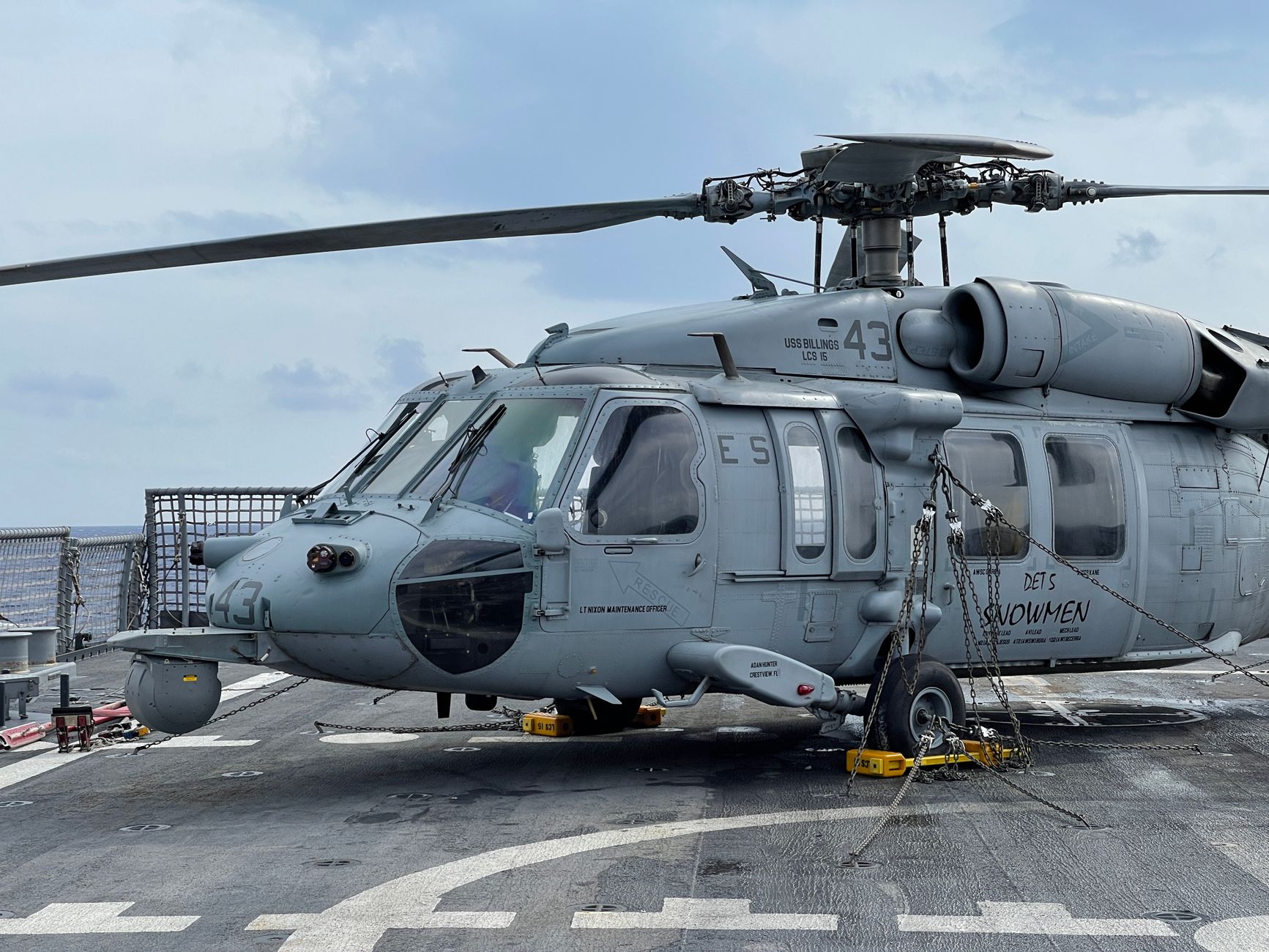
| Aircraft Carried | 60-75+ (F/A-18, E-2, C-2, MH-60, etc.) |
| Armament (Defensive) | RIM-7 Sea Sparrow / RIM-162 ESSM, RIM-116 RAM, Phalanx CIWS |
| Home Port | NAS North Island, San Diego, California |
| Service Life (Expected) | 50 years (with one RCOH) |
The Enduring Power of the USS Abraham Lincoln (CVN-72)
The USS Abraham Lincoln (CVN-72) stands as a monumental testament to modern naval engineering and strategic capability. Commissioned in 1989, she is the fifth vessel in the revered Nimitz-class, a lineage of nuclear-powered supercarriers that define global maritime dominance. Named after the 16th U.S. President, CVN-72 embodies the principles of resilience and forward presence, capable of projecting immense air power anywhere in the world.
At over 1,000 feet in length and displacing roughly 100,000 tons, the Abraham Lincoln is effectively a mobile airbase, designed to operate with unparalleled autonomy. Her immense flight deck, spanning 4.5 acres, facilitates the launch and recovery of dozens of sophisticated aircraft, forming the nucleus of a powerful Carrier Strike Group (CSG). This capability makes her a critical asset in national defense strategy, enabling rapid response to global crises, humanitarian aid missions, and sustained combat operations far from shore. The vessel's operational history is marked by extensive deployments, underscoring its pivotal role in maintaining stability and security across various theaters, including the U.S. 5th Fleet area of operations, as highlighted by recent activities.
Why This Matters & Unique Technical Insights
The USS Abraham Lincoln's technical prowess is what truly distinguishes it. At its heart are two Westinghouse A4W pressurized water reactors, providing the steam necessary to power four massive steam turbines, driving four bronze propellers. This nuclear propulsion system grants CVN-72 virtually unlimited range and the ability to sustain speeds in excess of 30 knots for extended periods without needing to refuel, a critical advantage for global power projection and responsiveness. Unlike conventionally powered ships, the Nimitz-class can operate for decades between reactor core replacements, significantly reducing logistical dependence on fuel supplies.
Beyond propulsion, the carrier's advanced flight deck systems, including four steam catapults and four arresting gear wires, are engineered for high-tempo flight operations, allowing for the launch and recovery of an aircraft every 45-60 seconds during peak periods. The vessel's defensive capabilities are equally robust, featuring a layered defense system with RIM-7 Sea Sparrow/RIM-162 ESSM missiles, RIM-116 Rolling Airframe Missiles (RAM), and Phalanx Close-in Weapon Systems (CIWS) to counter various aerial and surface threats. Furthermore, the extensive internal systems, from advanced radar and communication suites to complex damage control and medical facilities, represent a marvel of integrated engineering designed to support a crew of nearly 6,000 personnel and their sustained operational demands in some of the world's most challenging environments.
Explore careers in naval engineering and defense technology to be part of the future of maritime power.
Chronological Timeline
Keel laid for USS Abraham Lincoln (CVN-72).
USS Abraham Lincoln (CVN-72) commissioned into service.
Multiple deployments including Operation Desert Shield/Storm, Operation Southern Watch, Operation Enduring Freedom, and Operation Iraqi Freedom.
Underwent a major Refueling and Complex Overhaul (RCOH) at Newport News Shipbuilding.
Mentioned as being redirected and supporting Operation Epic Fury, highlighting ongoing operational relevance.
Frequently Asked Questions
What class of aircraft carrier is the USS Abraham Lincoln?
How is the USS Abraham Lincoln powered?
How many aircraft can the USS Abraham Lincoln carry?
What is the strategic importance of supercarriers like CVN-72?
Daily Specs Editorial Staff
Lead Technical Analyst & Hardware Researcher
The Daily Specs editorial staff compiles, benchmarks, and verifies emerging technical specifications directly from system architecture manuals, hardware datasheets, and open-source codebases to deliver high-gain technical intelligence.