USS Abraham Lincoln (CVN-72): Engineering & Strategic Power
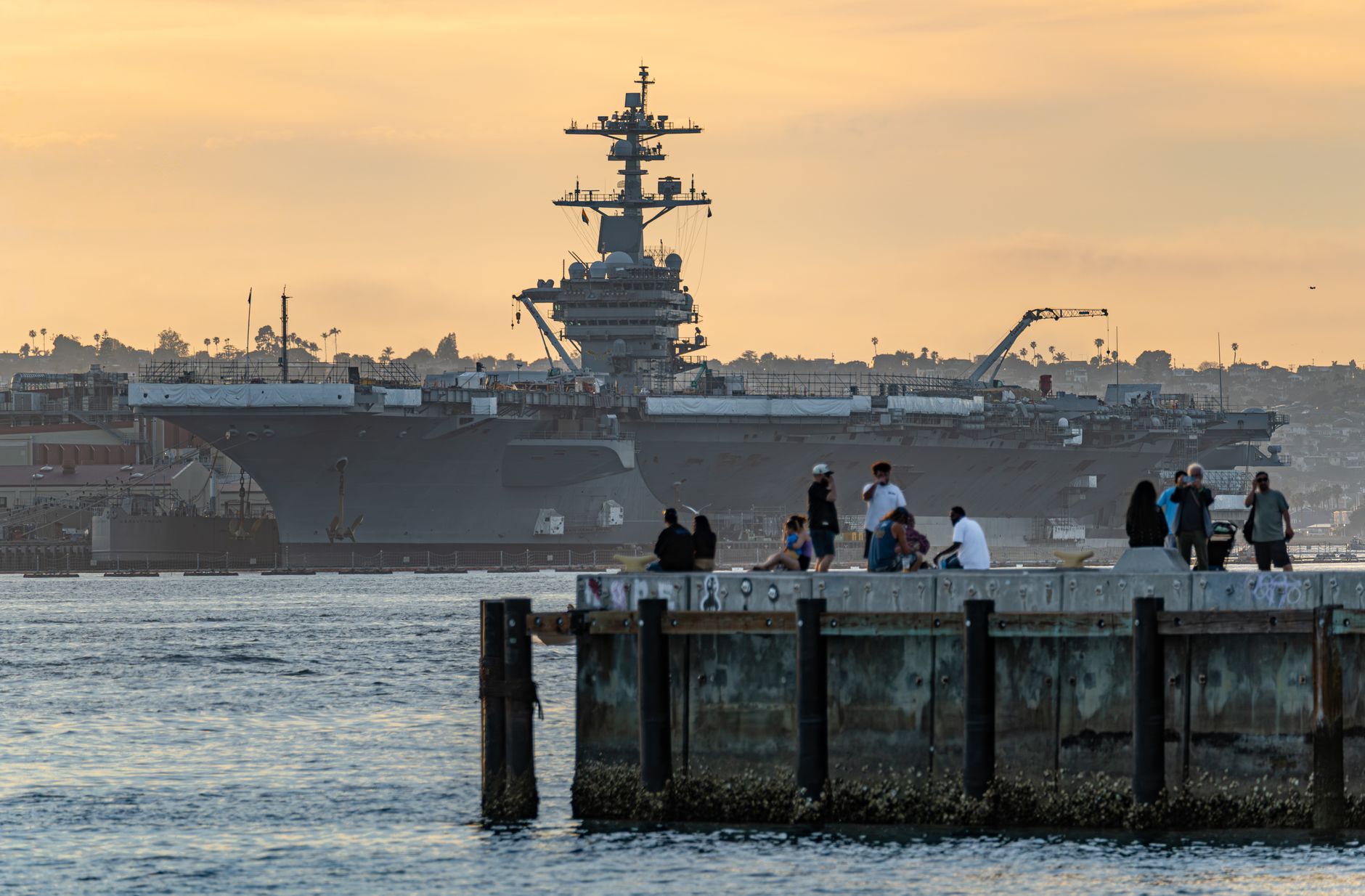
Key Takeaways
- •The USS Abraham Lincoln (CVN-72) operates on two A4W nuclear reactors, enabling over 20 years of continuous operation without refueling.
- •Equipped with four C-13 steam catapults, it can launch an aircraft every 20 seconds, supporting a robust carrier air wing of 90+ aircraft.
- •Its comprehensive defensive suite includes RIM-116 RAM and Phalanx CIWS, offering layered protection against sophisticated threats.
- •The ship's 2017 Refueling Complex Overhaul (RCOH) brought significant upgrades in combat systems, aviation infrastructure, and habitability, extending its service life.
Technical Specifications & Data
| Ship Type | Nimitz-class Aircraft Carrier |
| Hull Number | CVN-72 |
| Propulsion System | 2 × Westinghouse A4W pressurized water nuclear reactors |
| Reactor Power Output | ~260,000 shaft horsepower (194 MW) driving 4 shafts |
| Max Speed | 30+ knots (56+ km/h; 35+ mph) |
| Displacement (Full Load) | 100,000 – 104,000 long tons (approx. 112,000 metric tons) |
| Length (Overall) | 1,092 ft (332.8 m) |
| Flight Deck Width | 252 ft (76.8 m) |
| Aircraft Capacity | 90+ (fixed-wing & rotary-wing aircraft) |
| Aircraft Launch Systems | 4 × C-13 Mod 2 steam catapults |
| Primary Defensive Systems | RIM-116 RAM, ESSM (NATO Sea Sparrow), Phalanx CIWS |
| Crew Complement | Approx. 3,200 ship's company + 2,500 air wing personnel |
Technical Architecture Overview: A Floating Airbase
The USS Abraham Lincoln (CVN-72) stands as a testament to monumental naval engineering, representing the fifth ship of the iconic Nimitz-class aircraft carriers. Commissioned in 1989, it embodies the U.S. Navy's enduring commitment to global power projection and maritime dominance. At its core, the vessel's architecture is centered around two formidable Westinghouse A4W pressurized water nuclear reactors. These reactors are not merely power sources; they are the heart of a self-sustaining ecosystem that grants the carrier virtually unlimited range and allows for continuous operation for over two decades without the need for refueling. This unparalleled endurance significantly reduces logistical dependencies, making the CVN-72 a truly global asset capable of rapid deployment anywhere in the world.
Physically, the USS Abraham Lincoln is a behemoth, stretching approximately 1,092 feet (332.8 meters) in length with a flight deck width of 252 feet (76.8 meters). When fully loaded, its displacement can exceed 100,000 long tons, making it one of the largest warships ever built. The design emphasizes survivability and operational efficiency, featuring a highly compartmented hull structure built from high-strength steel. This robust construction provides significant redundancy and protection against battle damage, a critical factor for a vessel operating in contested environments. The flight deck itself is a marvel of aviation infrastructure, designed to accommodate a Carrier Air Wing (CVW) of over 90 fixed-wing and rotary-wing aircraft. Key to its offensive capabilities are the four C-13 Mod 2 steam catapults, powerful systems capable of launching fully loaded aircraft at high speeds in rapid succession. Complementing these are four sets of arresting gear, vital for safely recovering aircraft in demanding sea conditions. The integration of advanced command and control systems across this vast platform allows for real-time situational awareness and the coordination of complex air and sea operations, solidifying its role as a mobile, sovereign airbase.
Deep-Dive Systems & Performance Benchmarks: Unpacking Strategic Capabilities
The operational prowess of the USS Abraham Lincoln extends far beyond its sheer size, underpinned by a sophisticated array of integrated systems and performance benchmarks that define its strategic value. Its two Westinghouse A4W nuclear reactors generate approximately 260,000 shaft horsepower (194 MW), driving four massive propellers to achieve speeds in excess of 30 knots (56 km/h). This impressive speed, combined with its nuclear endurance, allows the carrier to rapidly respond to crises and maintain operational flexibility across vast oceans.
Aviation operations are central to the carrier's mission. Each of the four C-13 Mod 2 steam catapults can launch an aircraft, such as an F/A-18 Super Hornet, approximately every 20 seconds, facilitating a high sortie generation rate crucial for sustained combat operations. The carrier's air wing typically includes a diverse mix of aircraft:
- F/A-18E/F Super Hornets for strike and air superiority
- EA-18G Growlers for electronic warfare
- E-2C/D Hawkeyes for airborne early warning and command & control
- C-2 Greyhounds for carrier onboard delivery (COD)
- Various types of helicopters (e.g., MH-60R/S Seahawks) for anti-submarine warfare, search and rescue, and logistics
Defensive systems are layered and redundant, designed to counter a spectrum of threats. The CVN-72 is equipped with:
- Multiple RIM-116 Rolling Airframe Missile (RAM) launchers for close-in air defense against anti-ship missiles and aircraft.
- Phalanx CIWS (Close-In Weapon System), a 20mm Gatling gun system capable of autonomously detecting and engaging incoming threats at short range.
- Evolved Sea Sparrow Missiles (ESSM), providing increased range and capability against anti-ship missiles and aircraft.
Radar systems provide critical situational awareness. These include the
AN/SPS-48E 3-D air search radar for long-range air target detection and tracking, the AN/SPS-49(V)5 2-D air search radar for medium-range detection, and the AN/SPN-46 precision approach radar, essential for guiding aircraft safely back to the carrier. Electronic warfare capabilities are provided by the AN/SLQ-32(V)4 system, which can detect, identify, and jam enemy radar emissions. The ship's crew complement, comprising roughly 3,200 sailors for the ship's company and an additional 2,500 personnel for the embarked air wing, highlights the immense human effort required to operate such a complex vessel. "The sheer density of advanced technology and human coordination aboard a Nimitz-class carrier like the USS Abraham Lincoln is unparalleled, representing a mobile strategic asset of immense proportions."
Why This Matters & Industry Impact: Global Reach and Technological Legacy
The USS Abraham Lincoln (CVN-72) is more than just a warship; it's a profound statement of geopolitical influence and a testament to the pinnacle of naval engineering. Its strategic importance lies in its ability to project power and maintain maritime security across vast distances, operating as a sovereign airbase capable of conducting sustained combat operations, humanitarian aid, and disaster relief missions independently of foreign bases. This operational flexibility significantly enhances global stability by providing rapid response capabilities to emerging threats and crises worldwide. The carrier's deployment cycles often see it operating for six to nine months at a time, showcasing its endurance and the operational readiness of its crew and systems.
Industrially, the existence and maintenance of ships like the CVN-72 have a profound economic and technological impact. The construction of a Nimitz-class carrier is a multi-billion dollar endeavor, requiring tens of thousands of skilled workers and advanced manufacturing processes. The ship's Refueling Complex Overhaul (RCOH), a mid-life maintenance and modernization effort, further illustrates this. The USS Abraham Lincoln's RCOH, completed in 2017 at Newport News Shipbuilding, was a multi-year project costing billions of dollars. This extensive overhaul involved:
- Refueling both nuclear reactors.
- Complete renovation and upgrade of internal systems, including electrical, propulsion, and habitability.
- Modernization of combat systems, communication suites, and aviation support equipment to integrate the latest technologies.
- Structural modifications and repairs to extend the ship's service life by another 25 years.
Such projects are vital for sustaining a highly specialized industrial base, driving innovation in naval architecture, nuclear engineering, and systems integration. The CVN-72 also serves as a critical training platform, fostering a generation of highly skilled naval personnel and engineers. The demanding operational environment pushes the boundaries of material science, automation, and human-machine interface design. Its continued operation reflects ongoing advancements in naval technology and defense strategy, ensuring that the U.S. Navy retains a decisive edge in complex maritime environments. The Abraham Lincoln's legacy is one of unwavering presence, technological leadership, and a commitment to global security through robust engineering.
Explore advanced naval engineering courses to understand the complexity of modern warships.
Chronological Timeline
Keel laid at Newport News Shipbuilding.
Christened by Mrs. George Bush, then Second Lady of the United States.
Commissioned into service with the U.S. Navy.
Completed a comprehensive Refueling Complex Overhaul (RCOH) at Newport News Shipbuilding, extending its service life.
Frequently Asked Questions
What type of propulsion does the USS Abraham Lincoln use?
How many aircraft can the USS Abraham Lincoln carry?
What is a Refueling Complex Overhaul (RCOH) for an aircraft carrier?
Daily Specs Editorial Staff
Lead Technical Analyst & Hardware Researcher
The Daily Specs editorial staff compiles, benchmarks, and verifies emerging technical specifications directly from system architecture manuals, hardware datasheets, and open-source codebases to deliver high-gain technical intelligence.